The Future of LHPH (Lease-Here Pay-Here): How It Compares to BHPH and How to Run Both Models Efficiently
Lease-Here Pay-Here (LHPH) is gaining traction among independent dealers. This guide breaks down LHPH vs. BHPH, compliance, operations, and how DealerClick supports both models.

Lease-Here Pay-Here (LHPH) is gaining traction among independent dealers for a simple reason: it can align risk, cash flow, and inventory control in a way that traditional financing models don’t always match—especially in tougher affordability cycles. At the same time, Buy-Here Pay-Here (BHPH) remains a proven engine for operators who have the discipline, capital strategy, and collections maturity to run a portfolio well.
Note: This article is for informational purposes only and is not legal or tax advice. Requirements vary by state and by contract structure. Always consult qualified legal and tax professionals.
The Problem: Navigating Tougher Affordability Cycles in Auto Dealerships
Independent auto dealers face increasing pressure from rising vehicle prices and payment sensitivity. Customers prioritize predictable payments and flexible outcomes, making traditional financing models a challenge. This affordability pressure changes buyer behavior, pushing credit-challenged customers towards solutions that offer "access with structure."
Furthermore, compliance expectations continue to rise, with regulators and consumers scrutinizing disclosure quality, marketing clarity, and customer obligations. Disconnected systems and manual processes often hinder dealers from effectively managing both inventory and compliance, leading to operational blind spots and potential disputes.
The Solution: A Hybrid Approach with LHPH and BHPH
The evolving market demands a flexible approach to financing. Lease-Here Pay-Here (LHPH) and Buy-Here Pay-Here (BHPH) offer distinct advantages, and a hybrid model allows dealers to match the right model to the customer and the vehicle.
In a BHPH model, the dealer finances the transaction in-house, focusing on receivables, underwriting, and collections. The dealer’s primary asset is the note.
In an LHPH model, the dealer leases the vehicle, often retaining ownership. This model prioritizes asset control, faster inventory cycling, and lease-end processes. LHPH can be particularly effective when affordability is a key concern for customers.
The most important mindset shift for LHPH is that it tends to be more operationally inventory-centric, while BHPH tends to be more portfolio-centric. A hybrid model ensures optionality by customer segment and inventory type, provided a single system of record can enforce standardized workflows across both models.
Key Benefits of Running LHPH and BHPH Efficiently
Effectively integrating LHPH and BHPH models, especially with a robust system like DealerClick, offers several key benefits:
- Tighter Asset Control and Faster Inventory Cycling: LHPH models, where the dealer often retains ownership, allow for quicker recovery processes and reconditioning cycles. This leads to clearer asset-level decision-making and improved inventory turns.
- Enhanced Cash-Flow Stability: By providing different cash-flow timing dynamics, LHPH, paired with recurring payment systems, can optimize for cash-flow stability and risk-adjusted returns, especially in challenging markets.
- Improved Compliance and Audit Readiness: Modern software solutions ensure consistent documentation, payment tracking, and customer communication, building a clean audit trail. This mitigates compliance risks and standardizes disclosures.
- Operational Efficiency Through Unified Systems: Instead of disconnected spreadsheets and payment tools, a single DMS purpose-built for special finance models eliminates data fragmentation. This leads to reporting accuracy, fewer customer disputes, and streamlined operations across sales, finance, and operations teams.
- Increased Flexibility and Customer Reach: A hybrid approach allows dealers to tailor financing options to different customer segments and inventory types. This provides optionality and positions dealers to serve a broader market effectively, adapting to varying levels of customer risk and vehicle condition.
How It Works: Implementing a Seamless Hybrid Model
Running both LHPH and BHPH effectively requires a standardized operational playbook and a robust platform.
Lease Structuring Standards
You need repeatable rules:
- Lease terms by vehicle class
- Payment frequency and grace structures
- Fee standards (what, when, how disclosed)
- Repair and maintenance responsibility policies
Vehicle Readiness Discipline
LHPH can increase turnover, which increases operational load:
- Inspection standards at turn-in/turn-out
- Recon workflow and timelines
- Parts/service coordination
- Documentation of condition and decisions
Payment Workflow Maturity
You need to reduce friction while enforcing standards:
- Autopay enrollment + retry logic (process)
- Reminders and escalation sequences
- Exception handling (late payments, partial payments, disputes)
Lease-End Playbook
This is where many LHPH programs leak profit:
- Defined return process
- Condition assessment documentation
- Re-lease readiness checklist
- Disposition rules (re-lease vs. wholesale vs. auction)
Reporting That Supports Decisions
At minimum, you should be tracking:
- Payment performance (current rate, delinquency buckets, payment success rate)
- Vehicle downtime and recon cycle time
- Lease utilization by inventory type
- Customer communication outcomes (contact rates, promises kept)
| Category | BHPH | LHPH | What Changes Operationally |
|---|---|---|---|
| Core asset | Note/receivable | Vehicle utilization + lease cash flow | Portfolio KPIs vs. asset lifecycle KPIs |
| Ownership | Customer owns (with dealer lien) | Dealer often retains ownership | Lease-end workflow becomes critical |
| Customer promise | “Own the vehicle” | “Use the vehicle with structured payments” | Marketing, expectations, customer education |
| Risk concentration | Delinquency + loss severity | Vehicle condition + payment compliance | Service/recon capacity is more important |
| Recovery cycle | Repossession + remarketing | Return/recovery + reconditioning + re-lease | Faster turns possible, but requires discipline |
| Compliance emphasis | Lending/collections controls | Lease disclosures + advertising clarity + state rules | Documentation and audit trail become central |
| Reporting | Portfolio performance | Inventory lifecycle + payment performance | Different dashboards, same need for accuracy |
How DealerClick Supports Both LHPH and BHPH (In One Platform)
Dealers don’t need “more tools.” They need fewer tools that actually work together. DealerClick is built to support special finance dealerships—including both BHPH and LHPH—so you can run standardized workflows without breaking your process across systems.
LHPH: Core workflows DealerClick supports
Payment management
- Track payments accurately and consistently
- Support recurring payment workflows
- Maintain clean customer account histories
Customer relationship management
- Keep customer communication tied to the account
- Align reminders and follow-ups to payment status and policy
Inventory tracking with operational visibility
- Maintain inventory status, history, and readiness
- Keep maintenance and condition context accessible
Digital contracts and document handling
- Manage contracts and supporting documents in a consistent process
- Improve audit readiness with centralized records
Reporting and compliance support
- Produce operational reports that match your model
- Standardize the data that matters for leadership decision-making
BHPH: Core workflows DealerClick supports
Portfolio operations
- Track accounts, delinquencies, and payment histories
- Support consistent collections workflows
Deal documentation and contracts
- Keep deal documents tied to customer and vehicle records
- Reduce “missing paperwork” risk as you scale
Payments and reconciliation
- Support modern payment processing workflows
- Keep reporting aligned with what actually happened
Unified visibility across teams
- Sales, finance, and operations working from the same source of truth
Conclusion: Build the Model You Can Scale
The adoption of LHPH is likely to continue, making a hybrid approach increasingly beneficial for dealerships. Neither LHPH nor BHPH is universally "better"; the optimal choice depends on your team's operational discipline, reporting accuracy, and compliance readiness.
A hybrid model provides unmatched optionality by allowing you to match the financing strategy to specific customer segments and inventory types. The critical factor for success in any model—especially a hybrid one—is having a unified system of record that prevents data fragmentation and enforces repeatable workflows.
DealerClick helps implement the workflows, reporting, and operational discipline needed to scale, whether you’re evaluating LHPH, optimizing BHPH, or planning a comprehensive hybrid strategy.
Related Guides for LHPH and Special Finance Success
Explore our comprehensive guides to further optimize your dealership's LHPH and special finance operations:
- LHPH KPIs That Actually Predict Profit (and What “Good” Looks Like)
- Lease-End Playbook: Returns, Inspections, Fees, and Re-Lease in 7 Steps
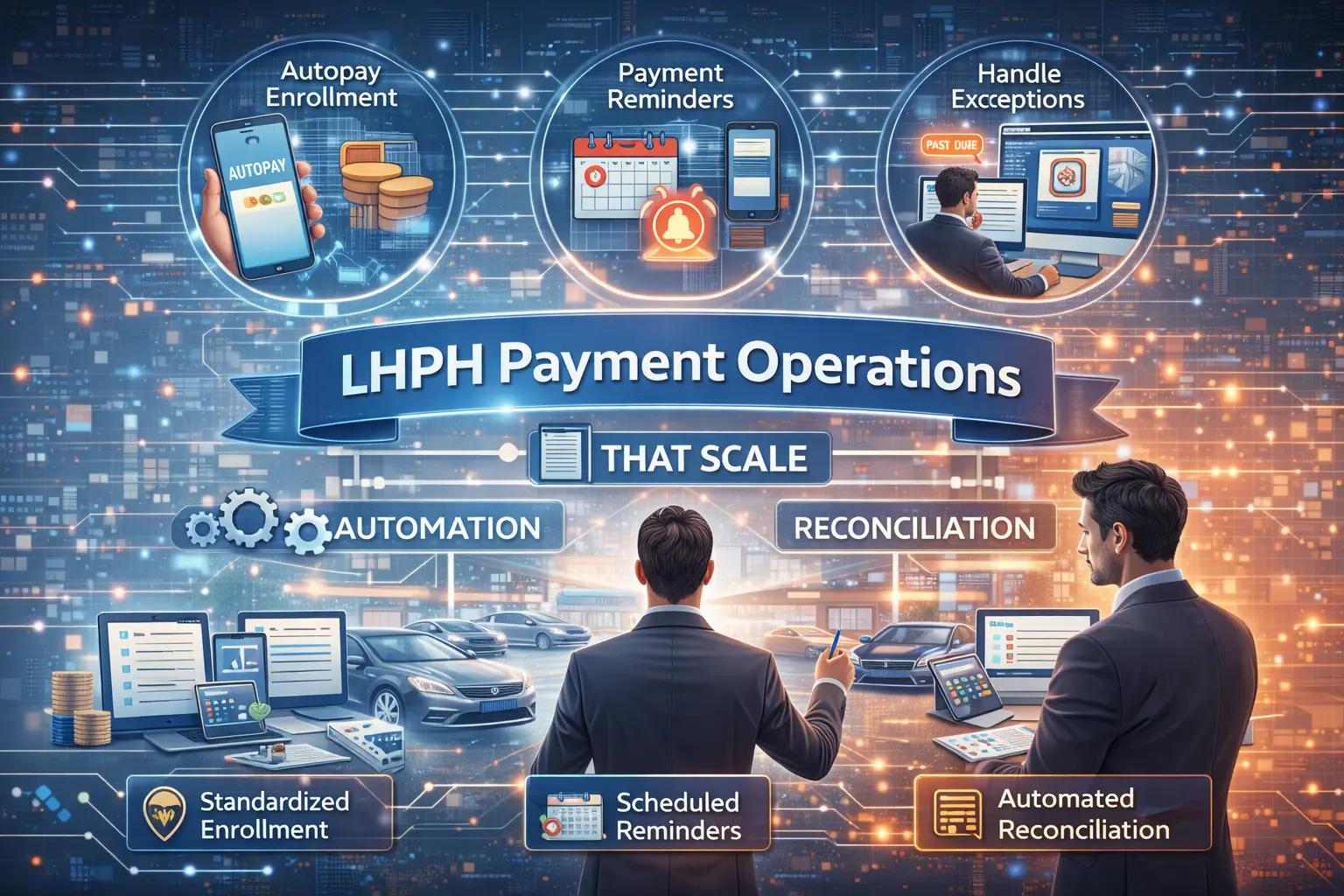
- Autopay, Reminders, and Exceptions: LHPH Payment Operations That Scale
- LHPH Inventory Strategy: Choosing Vehicles That Survive Frequent Turns
- LHPH vs BHPH Underwriting: What Changes When the Dealer Keeps the Asset
- Compliance-Ready LHPH: Document Control, Disclosures, and Audit Trails
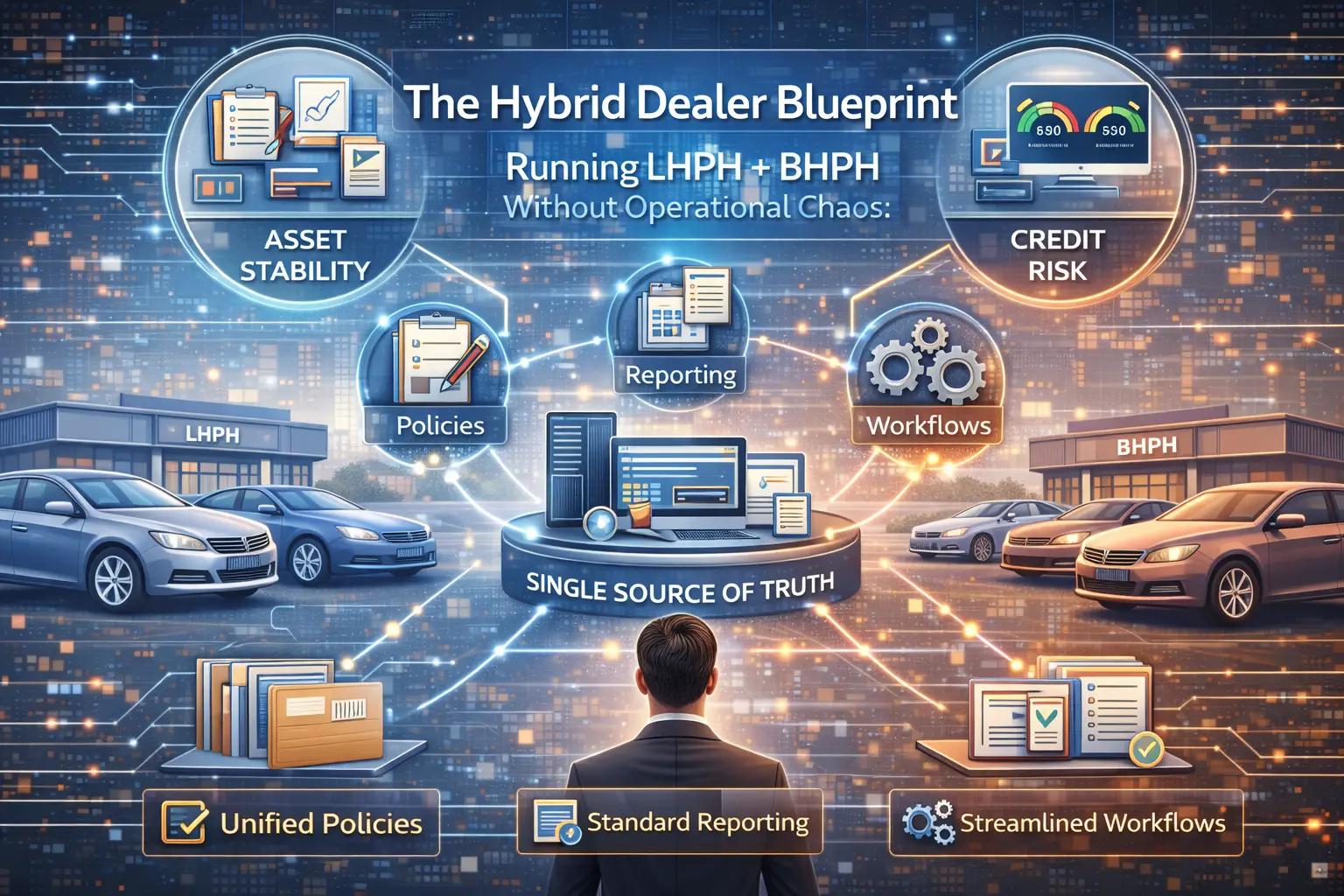
- The Hybrid Dealer Blueprint: Running LHPH + BHPH Without Operational Chaos
- LHPH Marketing and Messaging: How to Sell “Use” Without Confusing “Own”
- LHPH Financial Model: Unit Economics, Downtime Math, and Recon ROI
- Portfolio Strategy for Special Finance: Hold vs Sell in a Changing Market
Frequently Asked Questions (FAQs)
Is LHPH legal in my state?
It depends on your state and the way your lease program is structured. Requirements can differ significantly, and certain structures may trigger consumer lease disclosure obligations. Consult qualified legal counsel and ensure your documentation and processes are designed for compliance.
Is LHPH “better” than BHPH?
Neither model is universally better. LHPH can offer tighter asset control and potentially faster inventory cycling, while BHPH can offer long-term portfolio returns when executed well. The “best” model is the one your team can operationalize with discipline, reporting accuracy, and compliance readiness.
Can LHPH include a purchase option?
Some LHPH programs are designed with a purchase option, but terms and requirements vary. If you explore this path, ensure your contracts, disclosures, and customer communications are consistent and reviewed by counsel.
What KPIs matter most in LHPH?
At a minimum:
- Payment performance (current rate, delinquency buckets, promise-to-pay outcomes)
- Vehicle downtime (days out of service / days between customers)
- Recon cycle time (how quickly a unit becomes lease-ready)
- Lease utilization by inventory type
- Customer communication effectiveness (contact rates and resolutions rates)
What software features are non-negotiable for LHPH?
Most dealerships find these capabilities essential:
- Accurate payment tracking with recurring payment support
- Centralized customer account history and communication context
- Inventory readiness visibility and vehicle history tracking
- Document handling tied to the account and vehicle
- Operational reporting that matches your model
Stay Updated
Get the latest auto dealer insights delivered straight to your inbox.
No spam. Unsubscribe anytime.