LHPH Inventory Strategy: Choosing Vehicles That Survive Frequent Turns
In LHPH, poor vehicle selection and weak reconditioning discipline can quickly erode profits. Discover strategies for choosing inventory that thrives with frequent turns and minimizes downtime.
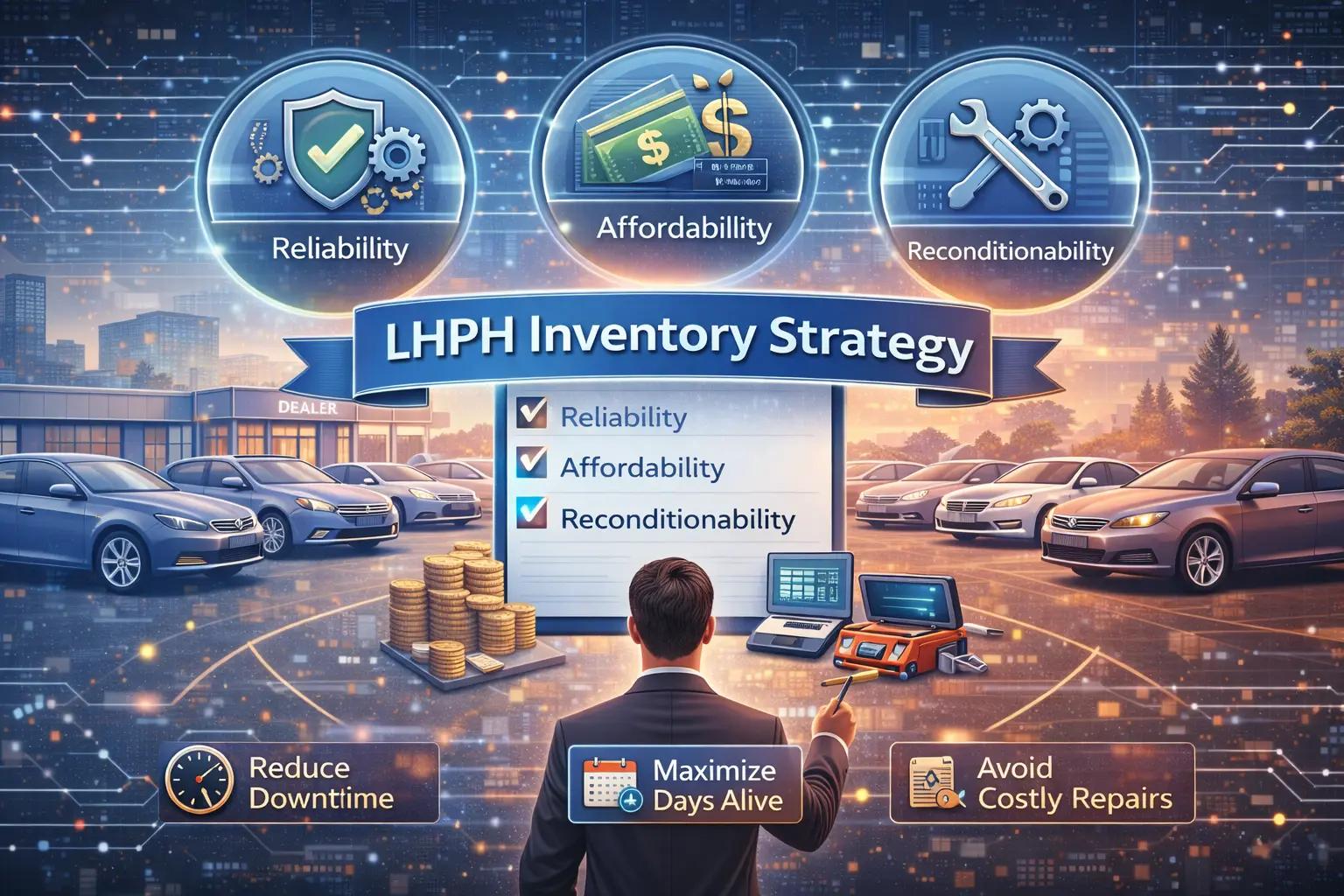
In the rapidly evolving Lease-Here Pay-Here (LHPH) landscape, an effective inventory strategy is paramount, dictating not just operational efficiency but outright profitability. Unlike traditional sales models, LHPH thrives on frequent vehicle turns, making vehicle selection and reconditioning discipline critical. For a foundational understanding of how LHPH models compare to BHPH and the operational nuances that drive success, refer to our comprehensive pillar post: The Future of LHPH (Lease-Here Pay-Here): How It Compares to BHPH and How to Run Both Models Efficiently. This article dives deep into selecting the right vehicles that can withstand the demands of an LHPH model, transforming potential liabilities into consistent revenue generators.
The Problem: The High Cost of Poor Inventory Selection in LHPH
In the Lease-Here Pay-Here (LHPH) model, the "cheapest car" can quickly become the most expensive. Weak reconditioning discipline and poor vehicle selection are significant profit killers, directly leading to increased downtime, higher churn, and eroded margins. Vehicles that aren't robust enough to handle frequent turns, or those that demand costly and time-consuming repairs, severely hinder the LHPH operational rhythm.
This problem manifests as:
- Extended Downtime: Vehicles spending too much time off the lot for repairs or reconditioning lose valuable revenue-generating days.
- Increased Maintenance Costs: Poorly selected vehicles, especially older or high-mileage units without a solid maintenance history, incur unexpected and frequent repair expenses.
- Higher Customer Churn: Unreliable vehicles lead to customer dissatisfaction, premature lease terminations, and a negative impact on your dealership’s reputation.
- Inaccurate Financial Forecasting: Without a predictable inventory lifecycle, it becomes challenging to forecast cash flow and profitability accurately, making strategic planning difficult.
Ultimately, a suboptimal inventory strategy undermines the very efficiency and asset control that LHPH is designed to provide.
The Solution: A Strategic LHPH Inventory Selection Framework
The solution to mitigating the high costs of poor inventory selection in LHPH is to implement a strategic framework that prioritizes vehicle durability, cost-effective reconditioning, and predictable operational cycles. This framework shifts the focus from merely acquiring vehicles to carefully selecting assets engineered for the unique demands of frequent leasing. By emphasizing factors like reliability, parts availability, and serviceability, dealers can build a fleet designed to minimize downtime and maximize revenue per active day.
A well-defined inventory strategy ensures that each vehicle entering your LHPH program is a strategic investment, capable of undergoing multiple turns with minimal profit leakage. This proactive approach supports robust reconditioning processes, reduces unexpected expenses, and enhances customer satisfaction, ultimately leading to a more stable and profitable LHPH operation.
Key Benefits of a Strategic LHPH Inventory Strategy
Implementing a well-thought-out LHPH inventory strategy delivers critical advantages for your dealership's long-term success:
- Minimized Downtime: By selecting reliable vehicles and standardizing reconditioning, you significantly reduce the time assets spend off the lot, maximizing their revenue-generating potential. For a detailed guide on managing vehicle returns and re-lease, refer to our Lease-End Playbook.
- Predictable Operational Costs: Focusing on vehicles with known reliability and affordable parts helps stabilize reconditioning and maintenance budgets, leading to more accurate financial forecasting.
- Increased Customer Satisfaction and Retention: Offering well-maintained, dependable vehicles enhances the customer experience, reducing complaints and encouraging lease renewals or future business.
- Optimized Asset Utilization: A streamlined inventory flow ensures vehicles are quickly prepared and re-leased, driving higher turn frequency and better returns on your capital investment.
- Enhanced Recon Efficiency: Standardized reconditioning processes, tailored to the specific needs of your chosen inventory, lead to faster turnaround times and a more consistent "lease-ready" product.
- Improved Profit Margins: Reduced downtime, controlled costs, and higher customer satisfaction directly translate into healthier profit margins per vehicle across multiple lease cycles.
How It Works: Building Your LHPH Inventory Selection Framework
A successful LHPH inventory strategy is built on informed vehicle selection, rigorous reconditioning, and meticulous tracking.
1. How LHPH Changes the Inventory Equation
In LHPH, inventory is not just stock; it's a rotating fleet of income-generating assets. This means:
- Turns are paramount: The more times a vehicle can be leased, the higher its lifetime value.
- Downtime is a margin killer: Every day a vehicle is idle, it's losing potential revenue and incurring carrying costs.
- Durability is key: Vehicles must withstand multiple lease cycles and different drivers.
2. Selection Framework
Choosing the right vehicles is foundational. Consider:
- Reliability / Common Failure Points: Research models known for durability and identify common issues that can be proactively addressed during recon. Focus on vehicles with a strong track record.
- Parts Availability and Cost: Opt for vehicles with readily available and affordably priced parts to ensure quick and cost-effective repairs. Exotic or niche vehicles can quickly become liabilities.
- Serviceability (Time-to-Repair): Prioritize models that are straightforward to service, minimizing the time mechanics spend on repairs and reducing recon cycle time.
- Mileage/Age Positioning by Customer Segment: Match vehicle age and mileage to specific customer credit profiles and expected lease durations. Newer, lower-mileage vehicles might suit longer, lower-risk leases, while older units might be better for shorter terms.
3. Recon Standardization: What Must Be Done Every Turn
A standardized reconditioning process is non-negotiable for consistent quality and efficiency.
- Define "Lease-Ready": Establish a clear, non-negotiable standard for what constitutes a "lease-ready" vehicle (safety checks, mechanical, cosmetic).
- Checklist-Driven Process: Implement detailed checklists for every recon step to ensure consistency and prevent overlooked items.
- Prioritize Critical Repairs: Focus on safety, drivability, and key components that impact reliability and customer satisfaction.
4. Downtime Math: Why “One Extra Week Idle” Hurts
Quantify the impact of downtime. If a vehicle generates $X per day in lease revenue, every idle day subtracts $X from its potential.
- Calculate Lost Revenue: Track average daily revenue per vehicle and multiply by idle days to see the true cost.
- Optimize Workflow: Identify bottlenecks in your recon, inspection, and administrative processes that contribute to downtime.
5. Maintenance Tracking and Lifecycle Documentation
Detailed records are essential for managing asset health and making informed decisions.
- Comprehensive Service History: Maintain a digital record of all maintenance, repairs, and inspections for each vehicle.
- Condition Reports: Document vehicle condition at acquisition and at every lease return.
- Predictive Maintenance: Use historical data to anticipate maintenance needs and schedule proactive interventions.
How DealerClick Supports Inventory Status, History, and Readiness Tracking
DealerClick provides an integrated platform that empowers LHPH dealers to manage their inventory with precision. Our robust tools allow for comprehensive tracking of vehicle status, detailed service histories, and real-time readiness updates. This centralized data ensures you can make informed decisions on vehicle acquisition, streamline your reconditioning processes, and minimize downtime, ultimately optimizing your LHPH product features for inventory management and asset utilization.
Conclusion: Driving Profitability Through Smart LHPH Inventory Management
In the competitive LHPH market, an intelligent inventory strategy is a powerful differentiator. By carefully selecting vehicles that are inherently reliable and cost-effective to maintain, and by implementing stringent reconditioning standards, dealerships can dramatically reduce downtime, control operational costs, and enhance customer satisfaction. This proactive approach ensures that each vehicle in your fleet consistently generates revenue and contributes positively to your bottom line.
Mastering the nuances of vehicle selection and lifecycle management transforms your inventory from a collection of cars into a highly efficient, profit-generating fleet. With the right strategy and tools, your dealership can thrive on frequent turns and build a sustainable LHPH operation.
Ready to optimize your LHPH inventory strategy for maximum profitability?
Frequently Asked Questions (FAQs)
What defines a "good" vehicle for an LHPH inventory strategy?
A "good" vehicle for LHPH is one that combines known reliability, readily available and affordable parts, and ease of serviceability. It should be capable of enduring multiple lease cycles with minimal downtime and predictable reconditioning costs, ultimately maximizing its revenue per active day.
How does downtime impact an LHPH dealership's profitability?
Downtime directly erodes LHPH profitability because every day a vehicle is not actively leased, it incurs carrying costs (insurance, depreciation) without generating revenue. This "lost revenue" significantly impacts the vehicle's overall unit economics and reduces the dealership's return on asset investment.
What is the role of reconditioning (recon) in LHPH inventory management?
Reconditioning is crucial in LHPH for ensuring vehicles are "lease-ready" quickly and reliably for subsequent turns. A standardized, efficient recon process minimizes downtime, controls costs, enhances customer satisfaction with the vehicle, and preserves the asset's value across multiple lease cycles.
How can DealerClick help with LHPH inventory management?
DealerClick offers an integrated platform that provides comprehensive tracking of vehicle status, detailed service histories, and real-time updates on reconditioning progress. This allows dealers to make data-driven decisions on vehicle acquisition, optimize recon workflows, and effectively manage their LHPH fleet to minimize downtime and maximize asset utilization.
How does vehicle selection in LHPH differ from a traditional BHPH model?
In BHPH, vehicle selection might prioritize lower acquisition costs to support subprime financing. In LHPH, while cost is still a factor, a greater emphasis is placed on the vehicle's long-term durability, predicted maintenance costs, and its ability to withstand frequent turns, as the dealer retains ownership and responsibility for the asset's lifecycle.
Stay Updated
Get the latest auto dealer insights delivered straight to your inbox.
No spam. Unsubscribe anytime.