LHPH vs BHPH Underwriting: What Changes When the Dealer Keeps the Asset
LHPH underwriting shifts focus from traditional credit risk to asset stability, usage fit, and consistent structuring rules. Discover how asset retention transforms your lending approach.
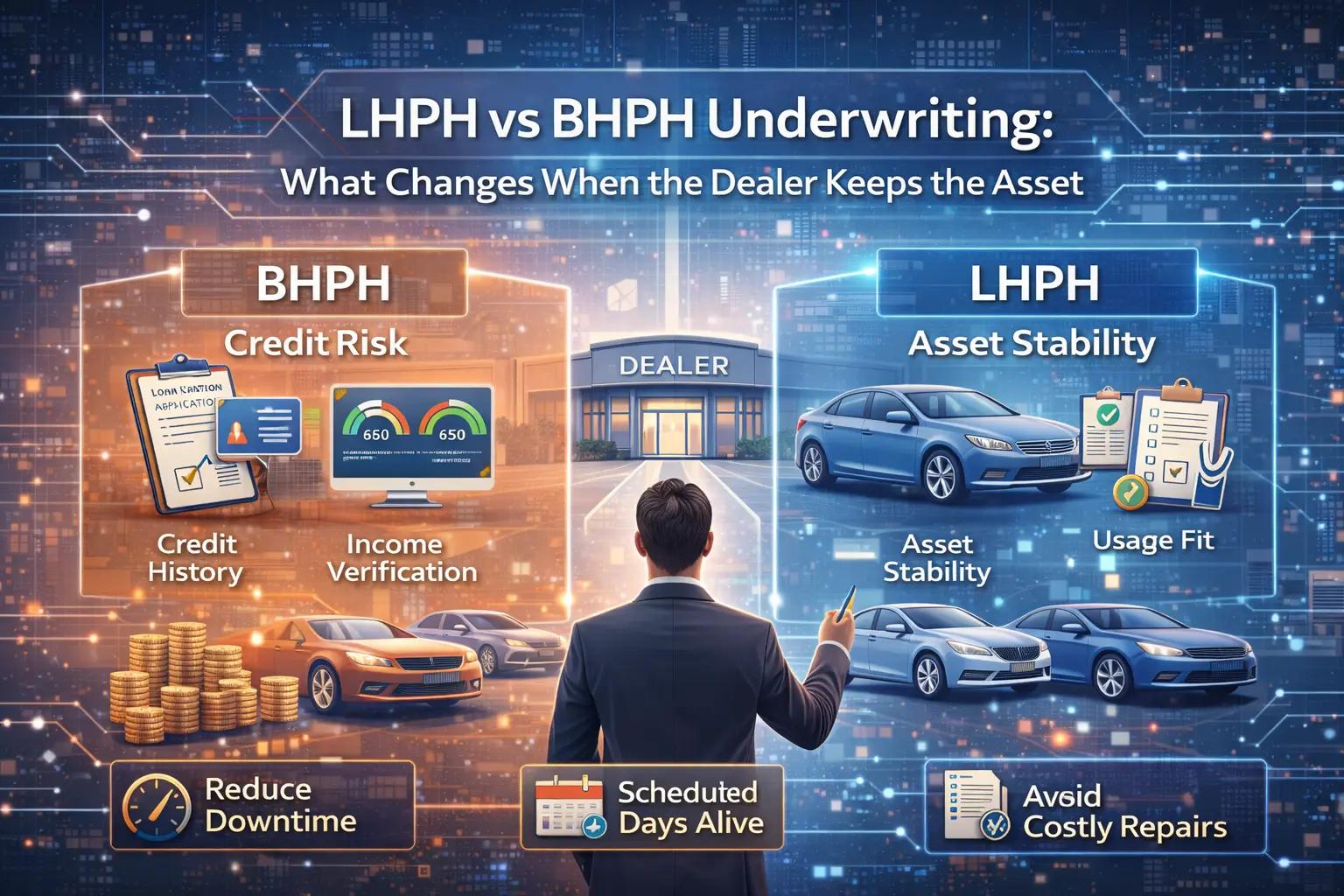
In the landscape of independent auto dealerships, the choice between Lease-Here Pay-Here (LHPH) and Buy-Here Pay-Here (BHPH) models profoundly impacts every facet of operations, especially underwriting. While creditworthiness remains a common thread, LHPH underwriting introduces a fundamental shift: the dealer retains ownership of the asset. This critical difference moves the emphasis beyond just a customer's ability to pay, towards their stability, the vehicle's usage fit, and the enforceability of consistent structuring rules. For a comprehensive overview of the LHPH model's strategic advantages and operational differences, consult our pillar post: The Future of LHPH (Lease-Here Pay-Here): How It Compares to BHPH and How to Run Both Models Efficiently. This article will delineate how LHPH asset retention transforms the underwriting process, detailing what changes and how to adapt effectively.
The Problem: Misaligned Underwriting in Asset-Retentive Models
A common pitfall for dealerships transitioning to or operating both LHPH and BHPH models is applying a singular underwriting philosophy to both. This misaligned approach often stems from a failure to fully grasp the implications of asset retention in LHPH. In a BHPH model, underwriting primarily assesses the customer's likelihood to repay a loan, with the vehicle serving as collateral. However, when the dealer retains ownership in an LHPH structure, the underwriting criteria must evolve to account for factors beyond just credit risk.
This problem manifests as:
- Inadequate Risk Assessment: Over-reliance on traditional credit scores can overlook key LHPH risks related to asset damage, excessive wear, or misuse, leading to unexpected reconditioning costs and diminished residual value.
- Suboptimal Deal Structuring: Lease terms might not adequately align with the customer's usage patterns or the asset's lifecycle, resulting in higher churn or reduced asset profitability.
- Increased Operational Burden: Without clear guidelines for stability and usage fit, dealers may face more frequent early terminations, vehicle recoveries, and subsequent reconditioning efforts.
- Customer Disputes: Ambiguous lease terms or a lack of understanding regarding responsibilities can lead to disagreements over vehicle condition or end-of-lease charges.
Ultimately, failing to adapt underwriting to the asset-retentive nature of LHPH can erode profitability and complicate operational management.
The Solution: A Tailored LHPH Underwriting Approach
The solution to effective LHPH underwriting lies in developing a tailored approach that explicitly accounts for the dealer's retention of the asset. This means augmenting traditional credit assessments with a deeper focus on customer stability, the intended usage of the vehicle, and the meticulous enforcement of consistent lease structuring rules. By shifting the underwriting lens, dealerships can proactively mitigate risks associated with asset depreciation, reconditioning costs, and lease compliance.
A specialized LHPH underwriting strategy empowers dealers to structure leases that are not only financially sound for the customer but also protect the long-term value and re-lease potential of the asset. This approach ensures that every lease agreement is designed for optimal asset utilization and maximizes the dealer's overall return. It leads to greater predictability, reduced operational headaches, and ultimately, a more profitable LHPH portfolio.
Key Benefits of Specialized LHPH Underwriting
Adopting a specialized underwriting approach for LHPH delivers distinct advantages for your dealership:
- Enhanced Asset Protection: Underwriting that prioritizes asset stability and usage fit directly contributes to maintaining the vehicle's condition and residual value throughout the lease term.
- Reduced Operational Costs: Proactive assessment of customer stability and consistent structuring rules minimize early terminations and costly repossessions, leading to lower reconditioning expenses.
- Improved Lease Performance: Tailoring lease terms to customer needs and vehicle lifecycle ensures a higher likelihood of lease completion and successful re-lease cycles.
- Clearer Risk Mitigation: Focusing on factors like payment cadence discipline and operational fit provides a more holistic view of risk, allowing for more informed decision-making beyond just credit scores.
- Streamlined Deal Structuring: Consistent lease structuring rules and an exceptions policy enable quicker, more efficient deal processing while maintaining profitability and risk control.
- Greater Portfolio Predictability: A refined underwriting process leads to a more stable LHPH portfolio with fewer surprises, facilitating better financial forecasting and strategic planning.
How It Works: Adapting Underwriting for Asset Retention
The shift from BHPH to LHPH underwriting requires a strategic re-evaluation of your risk assessment and deal structuring processes.
1. Underwriting Goals in Each Model
Understanding the primary goal of underwriting in each model is crucial:
- BHPH: Focus is primarily on portfolio yield and managing the risk of non-payment of a loan, with the vehicle as collateral for recovery.
- LHPH: Focus expands to asset utilization and payment compliance, as the dealer retains ownership and is concerned with the asset's condition, re-lease potential, and recurring revenue generation.
2. Inputs That Matter in Both Models
While the focus shifts, some core underwriting inputs remain relevant for both BHPH and LHPH:
- Income Stability: Verified, consistent income is paramount for any payment-based model.
- Employment History: Longer, stable employment generally indicates greater reliability.
- References: Personal and professional references can offer insights into character and responsibility.
- Residency Stability: Consistent residency suggests a more stable customer profile.
3. Signals That Matter More in LHPH
Due to asset retention, specific signals take on heightened importance in LHPH underwriting:
- Payment Cadence Discipline: A customer's history of making consistent, on-time payments is a stronger indicator of success than just their ability to qualify for a loan.
- Operational Fit: Does the customer's intended use of the vehicle align with expected wear and tear? (e.g., high mileage drivers for certain vehicles).
- Past Vehicle Care: While harder to assess, any available information on how a customer maintains vehicles can be valuable.
- Understanding of Lease Terms: Clear communication during the underwriting process about lease responsibilities (e.g., maintenance, excess wear, end-of-lease options) is critical.
4. Lease Structuring Rules
LHPH allows for more flexible structuring to manage risk and asset lifecycle:
- Payment Amount/Frequency: Align payments with customer pay cycles (e.g., weekly/bi-weekly) to enhance affordability and payment success.
- Deposits and Fees (Policy-Driven): Clearly defined and consistently applied policies for deposits, acquisition fees, and other charges.
- Term Length and Renewal Logic: Shorter terms can reduce overall asset risk, while clear renewal options can enhance customer retention and asset utilization.
- Maintenance Expectations: Clearly outline the customer's responsibility for routine maintenance to preserve asset value.
5. Exceptions Policy (How to Say Yes Safely)
A well-defined exceptions policy allows flexibility without compromising risk management:
- Establish specific criteria for when exceptions can be made.
- Define alternative structures or additional requirements for higher-risk profiles (e.g., higher deposit, shorter term, GPS tracking).
- Ensure all exceptions are documented and approved by a manager.
6. Consistency Across Hybrid Stores (One Rulebook, Two Model Outputs)
For dealerships running both BHPH and LHPH, consistency is key to avoiding confusion and ensuring compliance. To understand how to achieve this operational harmony, refer to our Hybrid Dealer Blueprint: Running LHPH + BHPH Without Operational Chaos.
- Unified Training: Train staff on both underwriting models, emphasizing their distinct goals and criteria.
- Clear Segregation: Establish clear rules for when a customer is channeled toward a lease versus a financed sale.
- Shared Data: Leverage a single system of record to maintain consistent customer data and history across both models.
How DealerClick Supports Standardized Eligibility Checks and Workflows
DealerClick provides integrated tools that empower dealerships to implement standardized underwriting processes for both LHPH and BHPH models. Our platform facilitates robust eligibility checks, supports flexible deal structuring, and ensures consistent application of policies across your financing options. With DealerClick, you can streamline your underwriting workflows, make data-driven decisions to manage risk effectively, and optimize the profitability of your LHPH portfolio. Learn more about our LHPH product features for credit and deal workflow management. To better understand the contrast, explore our BHPH Guide.
Conclusion: Refining Profitability with Asset-Focused Underwriting
The strategic difference between LHPH and BHPH underwriting is profound: one focuses on the note, the other on the asset. For independent auto dealers, recognizing and adapting to this distinction is paramount for sustained profitability. By prioritizing customer stability, usage fit, and consistent lease structuring, LHPH underwriting moves beyond traditional credit assessment to safeguard the long-term value and re-lease potential of every vehicle.
Embracing a tailored LHPH underwriting approach, supported by integrated solutions like DealerClick, empowers dealerships to make smarter, more profitable decisions. It enables you to confidently structure deals that protect your assets, minimize operational headaches, and drive predictable recurring revenue.
Ready to refine your LHPH underwriting for maximum asset protection and profitability?
Frequently Asked Questions (FAQs)
What's the fundamental difference in underwriting philosophy between LHPH and BHPH?
The fundamental difference is asset ownership. In BHPH, the dealer is primarily underwriting the customer's ability to repay a loan, with the vehicle as collateral. In LHPH, the dealer retains ownership, so underwriting focuses not only on payment ability but also heavily on preserving the asset's value, anticipating usage, and ensuring the vehicle's long-term re-lease potential.
Why is customer "stability" more critical in LHPH underwriting?
Customer stability (e.g., job history, residency, payment habits) is crucial in LHPH because a stable customer is more likely to care for the asset, adhere to maintenance requirements, and complete the lease term without excessive wear and tear. This directly impacts the vehicle's condition and residual value, which the dealer still owns.
What are "lease structuring rules" in LHPH underwriting?
Lease structuring rules in LHPH underwriting define the parameters for creating a lease agreement. This includes determining payment amounts, frequency (e.g., weekly/bi-weekly), deposit requirements, lease term length, and clearly outlining customer responsibilities for maintenance and end-of-lease conditions. These rules are designed to balance customer affordability with asset protection and profitability.
How does DealerClick support hybrid LHPH and BHPH underwriting?
DealerClick provides a unified platform that allows dealerships to manage distinct underwriting processes for both LHPH and BHPH models. It supports customized eligibility checks, flexible deal structuring tools, and consistent application of policies across both financing types. This helps ensure compliance and optimizes risk management for each model from a single system.
Can LHPH underwriting influence asset depreciation?
Yes, LHPH underwriting can indirectly influence asset depreciation. By carefully assessing a customer's usage fit and emphasizing maintenance responsibilities within the lease agreement, dealers can encourage better care of the vehicle. This helps preserve the asset's condition, which in turn can mitigate excessive depreciation and enhance its value for subsequent re-lease cycles.
Stay Updated
Get the latest auto dealer insights delivered straight to your inbox.
No spam. Unsubscribe anytime.