Compliance-Ready LHPH: Document Control, Disclosures, and Audit Trails
Compliance readiness is an operational imperative for LHPH dealerships. It demands controlled documents, provable disclosure delivery, consistent customer communication, and retrievable audit trails.
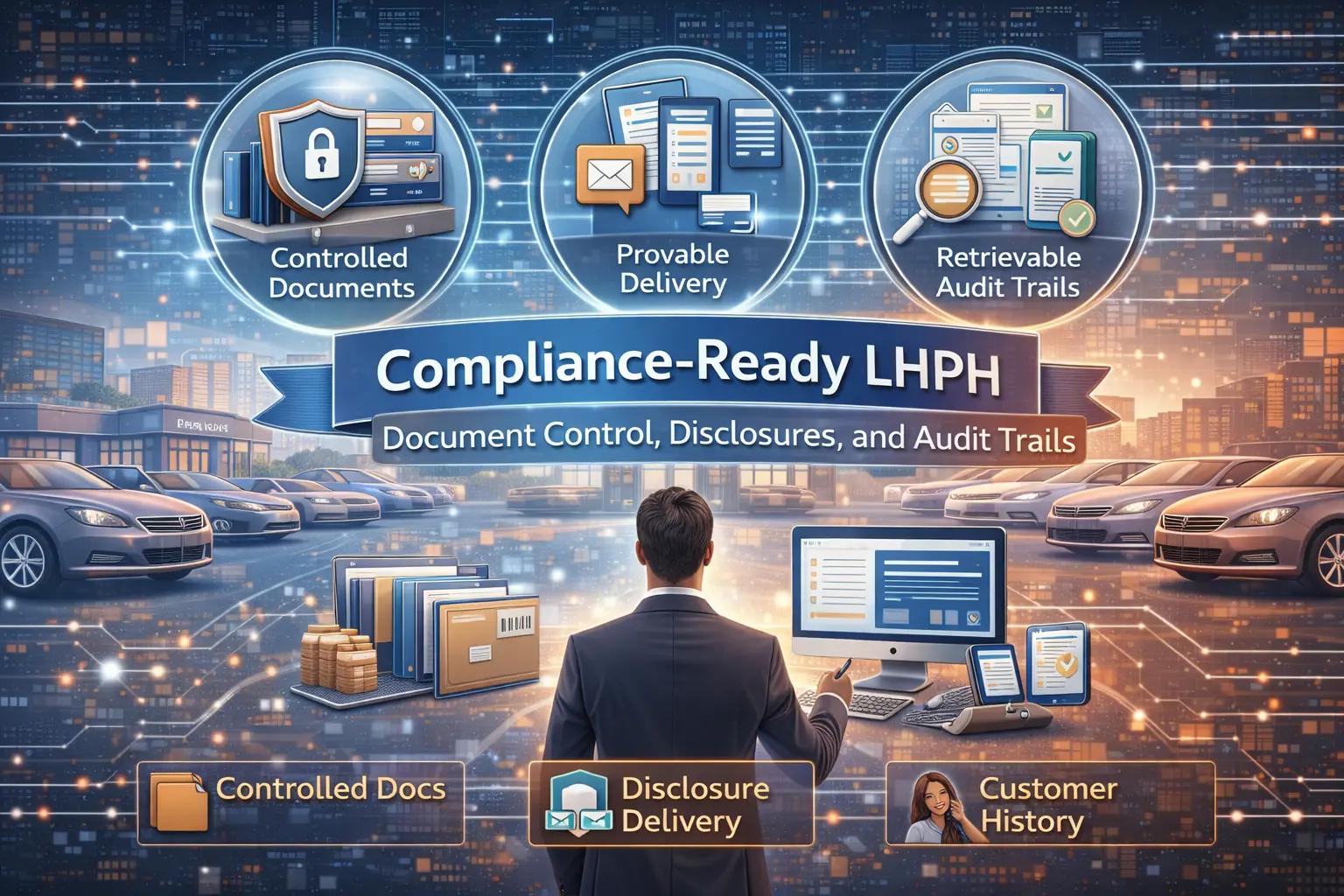
In the evolving landscape of Lease-Here Pay-Here (LHPH) operations, regulatory scrutiny and consumer protection expectations are continuously intensifying. Being "compliance-ready" is no longer merely about avoiding penalties; it's a fundamental operational imperative that builds trust, mitigates risk, and ensures sustainable growth. For a foundational understanding of the LHPH model's compliance realities and how it contrasts with traditional financing, refer to our comprehensive pillar post: The Future of LHPH (Lease-Here Pay-Here): How It Compares to BHPH and How to Run Both Models Efficiently. This article will delve into the core components of operational compliance for LHPH dealerships: robust document control, provable disclosure delivery, consistent customer communication, and meticulous audit trails.
The Problem: Escalating Compliance Risks in LHPH Operations
The very flexibility and accessibility that make Lease-Here Pay-Here (LHPH) attractive also expose dealerships to heightened compliance risks. As the model gains traction, so too does the scrutiny from regulators and consumer advocates. Understanding the unique underwriting challenges in LHPH, where the dealer retains the asset, is crucial for mitigating these risks early, as detailed in our guide on LHPH vs BHPH Underwriting. A lack of operational rigor in handling documents, delivering disclosures, and maintaining communication can quickly lead to:
- Regulatory Penalties: Non-compliance with state-specific leasing laws, truth-in-lending acts, or consumer protection regulations can result in substantial fines and operational restrictions.
- Customer Disputes and Litigation: Ambiguous contracts, unproven disclosures, or inconsistent communication can spark customer complaints, leading to costly legal battles and reputational damage.
- Operational Inefficiencies: Disorganized document management and a lack of clear audit trails consume excessive staff time, hinder internal processes, and make it difficult to respond quickly to inquiries or audits.
- Erosion of Trust: Inconsistent practices undermine customer confidence and can damage the dealership's standing in the community, impacting long-term growth.
Without a proactive and systematic approach to compliance, LHPH dealerships risk turning potential growth opportunities into significant liabilities.
The Solution: Operationalizing LHPH Compliance with Rigor
The solution to navigating the complex world of LHPH compliance lies in operationalizing every aspect of your business with an unwavering commitment to rigor and transparency. This means moving beyond theoretical understanding to implementing practical, day-to-day processes that ensure robust document control, provable disclosure delivery, standardized communication, and an impeccable audit trail. Compliance is not a one-time check; it's an ongoing operational discipline.
By integrating compliance directly into your workflows, dealerships can proactively mitigate risks, foster greater customer trust, and streamline their operations. A systematic approach ensures that every interaction, document, and decision adheres to regulatory requirements, transforming compliance from a burden into a strategic advantage that underpins the stability and reputation of your LHPH program.
Key Benefits of a Compliance-Ready LHPH Operation
Achieving compliance readiness in your LHPH operations yields substantial benefits that protect your business and enhance its long-term viability:
- Mitigated Legal and Financial Risk: Robust document control and provable disclosures significantly reduce exposure to regulatory fines, legal challenges, and costly customer disputes.
- Enhanced Customer Trust and Loyalty: Transparent practices and clear communication build stronger relationships with customers, fostering loyalty and positive word-of-mouth.
- Streamlined Operations: Standardized processes for document handling, disclosure delivery, and communication reduce administrative burden and improve overall efficiency.
- Faster Audit Response Times: A meticulous and easily retrievable audit trail allows for quick and confident responses to regulatory inquiries or internal reviews, minimizing disruption.
- Improved Staff Accountability and Training: Clear compliance protocols provide a framework for staff training, ensuring everyone understands their roles and responsibilities in upholding regulatory standards.
- Stronger Brand Reputation: A reputation for ethical and compliant practices distinguishes your dealership in the market, attracting more customers and business opportunities.
How It Works: Building Your Compliance-Ready LHPH Framework
Achieving compliance readiness in LHPH is an ongoing operational commitment built on several key pillars:
1. What “Compliance-Ready” Means in Day-to-Day Dealership Operations
"Compliance-ready" means that your dealership's daily activities, from the initial customer interaction to lease maturity and beyond, are consistently executed in a manner that adheres to all applicable laws and regulations. It means being able to instantly prove what was done, when it was done, and how it was communicated.
2. Document Lifecycle Controls
Robust management of all lease-related documents is foundational.
- Approved Templates: Utilize only legally reviewed and approved lease agreements, addenda, and disclosures. Ensure these are always the most current versions.
- Versioning and Access Control: Implement systems to track document versions and control who can access, modify, or approve them.
- Signature Capture and Storage: Ensure legally compliant electronic signature capture and secure, indexed digital storage for all signed documents, making them readily retrievable.
3. Disclosure Delivery Proof
It's not enough to provide disclosures; you must prove they were delivered and understood.
- Timestamps: Implement electronic systems that timestamp when disclosures are presented and acknowledged by the customer.
- Retention: Maintain digital records of every disclosure provided to each customer for the legally required retention period.
- Retrieval: Ensure any disclosure, for any customer, can be quickly and easily retrieved upon request from a customer or regulator.
4. Advertising and Message Consistency Checklist
Prevent confusion and avoid misleading statements in all customer-facing materials.
- Avoid “Lease vs. Own” Confusion: Train staff and audit marketing materials to clearly differentiate between leasing and owning. Ensure language is unambiguous.
- Clear Terms: All advertised lease terms, payment structures, and responsibilities must be presented clearly and completely, avoiding fine print that obscures critical details.
- Review Process: Implement a review process for all advertising, website content, and sales scripts to ensure compliance with advertising regulations.
5. Staff Enablement: Training + Scripts + Prohibited Ambiguity
Your frontline team is your first line of defense in compliance.
- Comprehensive Training: Provide regular, mandatory training on all compliance policies, relevant regulations (e.g., TILA, state-specific leasing laws), and internal procedures.
- Standardized Scripts: Equip sales and finance teams with approved scripts for explaining lease terms, customer responsibilities, and handling common questions or objections.
- Prohibited Ambiguity: Emphasize the importance of clear, honest communication and explicitly prohibit vague or potentially misleading statements.
6. Audit Trail Expectations
Always operate as if an audit is imminent.
- Who Did What, When: Every material action, customer interaction, and document modification should be logged with user, date, and time stamps.
- Centralized Records: All compliance-related data and documents should be stored in a centralized, secure system.
- Regular Reviews: Conduct internal compliance reviews regularly to identify and address any potential gaps before they become problems.
How DealerClick Supports Centralized Documents and Reporting
DealerClick is built to streamline and strengthen your LHPH compliance framework. Our integrated platform offers robust document management features, ensuring you use approved templates, capture compliant e-signatures, and store all critical lease documents in a secure, easily retrievable format. Our comprehensive reporting capabilities provide clear audit trails, tracking every interaction and disclosure delivery. This centralized approach empowers your team to maintain compliance with confidence and supports your LHPH operations with contracts and compliance features.
Conclusion: Securing Your LHPH Future Through Proactive Compliance
In the competitive LHPH market, proactive compliance isn't just about adhering to rules—it's about building a foundation of trust and operational excellence. By meticulously controlling documents, ensuring provable disclosure delivery, maintaining consistent communication, and building a robust audit trail, dealerships can transform compliance from a potential vulnerability into a powerful strategic advantage. This commitment safeguards against regulatory risks, enhances customer loyalty, and streamlines your entire operation.
Embrace compliance readiness as a core pillar of your LHPH strategy. With the right processes and integrated tools like DealerClick, your dealership can confidently navigate regulatory complexities and secure a thriving, reputable future.
Ready to elevate your LHPH operations with an ironclad compliance framework?
Frequently Asked Questions (FAQs)
What does "document control" mean for LHPH compliance?
Document control in LHPH compliance refers to the systematic management of all lease-related paperwork, including contracts, disclosures, and agreements. It ensures that only approved, current templates are used, all documents are correctly filled out, signed, and securely stored, and can be easily retrieved for audits or customer inquiries.
Why is provable disclosure delivery critical in LHPH?
Provable disclosure delivery is critical because regulators require dealers to demonstrate that customers received and acknowledged all necessary information (e.g., lease terms, fees, responsibilities) before signing. Without proof of delivery, a dealership is vulnerable to claims of non-disclosure, leading to potential fines and disputes.
How does consistent customer communication relate to LHPH compliance?
Consistent customer communication is a key aspect of LHPH compliance as it prevents misunderstandings and disputes. Ensuring all staff use standardized scripts and provide clear, accurate information about lease terms, fees, and responsibilities helps avoid misrepresentation, builds trust, and creates a clear record for audit trails.
What kind of audit trail should an LHPH dealership maintain?
An LHPH dealership should maintain a comprehensive audit trail that logs every significant action, customer interaction, and document change with timestamps and user identifiers. This includes records of all disclosures, payment histories, communications, and vehicle condition reports, ensuring that the entire lease lifecycle is transparent and verifiable.
How can DealerClick enhance LHPH compliance efforts?
DealerClick streamlines LHPH compliance by centralizing document management with approved templates and secure e-signature capabilities. It records and tracks disclosure delivery, maintains detailed communication logs, and generates comprehensive reports that provide a clear audit trail, reducing administrative burden and strengthening a dealership's compliance posture.
Stay Updated
Get the latest auto dealer insights delivered straight to your inbox.
No spam. Unsubscribe anytime.