Lease-End Playbook: Returns, Inspections, Fees, and Re-Lease in 7 Steps
Lease-end is where profit leaks for LHPH dealerships. A documented playbook protects margin, reduces disputes, and speeds up re-lease cycles.
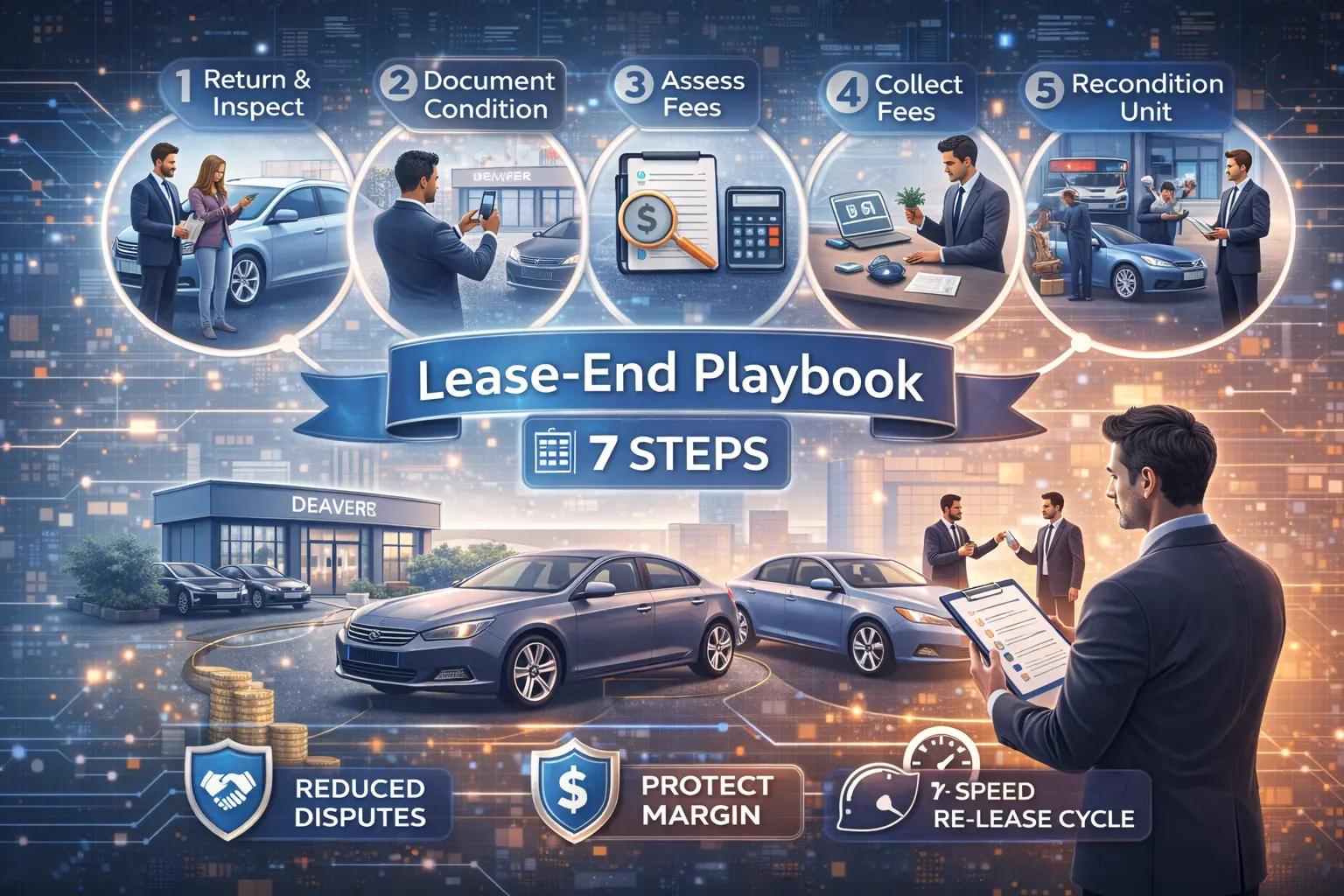
For Lease-Here Pay-Here (LHPH) dealerships, the period following a lease’s conclusion is not merely an administrative formality; it’s a critical juncture where profitability can either be secured or lost. Effectively managing returns, inspections, fees, and the re-lease process demands a precise, documented approach. For a broader understanding of how LHPH contrasts with BHPH and contributes to overall dealership efficiency, explore our comprehensive guide: The Future of LHPH (Lease-Here Pay-Here): How It Compares to BHPH and How to Run Both Models Efficiently. This detailed playbook is designed to help LHPH operators protect their margins, minimize disputes, and dramatically accelerate re-lease cycles.
The Problem: Profit Leaks at Lease-End
In Lease-Here Pay-Here (LHPH) operations, the lease-end process often becomes a significant point of profit leakage. Without clear, standardized procedures, dealerships face a cascade of issues: prolonged vehicle downtime, unexpected reconditioning costs, customer disputes over charges, and slow re-lease cycles. This lack of a defined playbook can turn what should be a profitable asset turn into a drain on resources and capital.
Many dealers underestimate the complexity of managing lease returns, from inconsistent inspection standards and undocumented vehicle conditions to ambiguous fee structures and inefficient reconditioning workflows. These operational gaps directly impact inventory readiness and ultimately, the dealership’s ability to generate recurring revenue, making lease-end a make-or-break moment for LHPH profitability.
The Solution: A Documented Lease-End Playbook
A robust, documented lease-end playbook is the strategic solution to mitigate profit leaks and optimize LHPH operations. This comprehensive guide provides step-by-step procedures for every stage of the lease-end process, ensuring consistency, transparency, and efficiency. By standardizing communication, inspection protocols, reconditioning workflows, and disposition rules, dealerships can transform a historically chaotic phase into a well-oiled machine.
Implementing a clear playbook protects dealership margins by accurately assessing vehicle condition and charges, reduces customer disputes through transparent communication, and dramatically speeds up re-lease cycles by optimizing inventory readiness. This proactive approach not only secures profitability but also enhances customer satisfaction and operational control for LHPH product features, like inventory and document handling.
Key Benefits of a Structured Lease-End Process
Adopting a formalized lease-end playbook delivers a multitude of advantages for LHPH dealerships:
- Maximized Profitability: By systematically managing returns, inspections, and re-lease, you minimize unexpected costs and reduce vehicle downtime, ensuring each asset generates revenue more consistently.
- Reduced Customer Disputes: Clear communication and transparent documentation of vehicle condition and fees at lease-end lead to fewer misunderstandings and higher customer satisfaction.
- Accelerated Inventory Turns: Streamlined reconditioning and readiness checks ensure vehicles are quickly prepared for their next lease, maximizing asset utilization and revenue generation. For strategies on selecting inventory that thrives with frequent turns, see our guide on LHPH Inventory Strategy: Choosing Vehicles That Survive Frequent Turns.
- Enhanced Operational Efficiency: Standardized procedures reduce guesswork and errors, improving coordination between departments involved in inspections, service, and sales.
- Improved Compliance and Audit Readiness: Consistent documentation and adherence to defined processes strengthen your audit trail, crucial for demonstrating regulatory compliance.
- Predictable Asset Management: Gain better control over your LHPH fleet's lifecycle, from return to remarketing, allowing for more accurate financial forecasting and inventory planning.
How It Works: Your 7-Step LHPH Lease-End Playbook
Implementing a standardized lease-end process is critical for maximizing LHPH profitability. Here’s a 7-step playbook to guide your operations:
Step 1: Pre-Return Communication and Scheduling
Proactively engage customers well before their lease maturity date.
- Communicate Options: Clearly inform customers about lease-end options (return, renewal, purchase) and their associated responsibilities.
- Schedule Return: Coordinate a specific date and time for vehicle return and inspection.
- Provide Checklist: Offer a pre-return checklist of expectations, including cleaning, personal item removal, and documentation needed.
Step 2: Condition Standards + Photo Documentation Checklist
Establish objective standards for vehicle condition and meticulously document it.
- Define Wear & Tear: Clearly define what constitutes "normal wear and tear" versus excess damage.
- Detailed Inspection: Conduct a thorough inspection, inside and out, noting all damage, mileage, and missing items.
- Photo/Video Evidence: Capture high-resolution photos and videos of the vehicle's condition, especially any damage, at the time of return.
Step 3: Safety and Maintenance Minimums (Define “Lease-Ready”)
Ensure every returned vehicle meets minimum safety and operational standards before re-leasing.
- Safety Check: Perform a comprehensive safety inspection (brakes, tires, lights, etc.).
- Maintenance Records: Verify all scheduled maintenance has been performed, or identify what’s needed.
- Operational Test: Ensure all vehicle systems are fully functional.
Step 4: Charge Assessment + Customer Communication Guidelines
Transparently assess and communicate any end-of-lease charges.
- Damage Assessment: Quantify charges for excess wear and tear based on predefined standards.
- Mileage Charges: Calculate any excess mileage fees.
- Clear Communication: Present charges clearly and respectfully, backed by documented evidence, and explain the customer's options.
Step 5: Recon Workflow (Tickets, Parts, Labor, Turnaround Targets)
Efficiently manage the reconditioning process to minimize downtime.
- Service Tickets: Generate detailed service tickets for all necessary repairs and reconditioning.
- Parts Ordering: Streamline parts acquisition to avoid delays.
- Labor Allocation: Efficiently assign labor and set clear turnaround time targets for recon completion.
Step 6: Merchandising Checklist (Photos, Notes, Status Readiness)
Prepare the vehicle for its next lease, focusing on speed and attractiveness.
- Professional Detail: Ensure the vehicle is thoroughly cleaned and detailed.
- New Photos: Take high-quality photos for online listings.
- Status Update: Update inventory systems to "lease-ready" with all relevant notes.
Step 7: Disposition Rules (Re-Lease vs Wholesale vs Auction)
Make data-driven decisions on the vehicle's next step.
- Re-Lease Potential: Assess if the vehicle is suitable for re-lease based on condition, demand, and profitability.
- Wholesale/Auction: Define criteria for wholesaling or sending to auction if re-leasing isn't the best option.
- Documentation: Ensure all disposition decisions are documented.
How DealerClick Supports Lease-End Documentation and Inventory Readiness
DealerClick’s unified platform streamlines your lease-end processes by providing robust tools for inventory management and document handling. From tracking vehicle condition and maintenance history to managing digital contracts and ensuring audit-ready documentation, DealerClick helps you minimize downtime and maximize the value of every asset. Find out more about our LHPH product features for inventory and document management.
Conclusion: Securing Profit and Efficiency at Lease-End
A well-executed lease-end process is not an afterthought but a cornerstone of profitability for LHPH dealerships. By implementing a clear, 7-step playbook covering everything from pre-return communication to disposition rules, dealers can effectively protect their margins, reduce customer disputes, and accelerate their re-lease cycles. This systematic approach, supported by efficient tools for inventory and document handling, transforms lease-end from a potential profit leak into a powerful driver of operational efficiency and recurring revenue.
Embrace a documented lease-end strategy to ensure every asset turn contributes positively to your dealership's success.
Ready to streamline your LHPH lease-end operations and boost profitability?
Frequently Asked Questions (FAQs)
Why is a documented lease-end playbook important for LHPH?
A documented lease-end playbook is crucial for LHPH because it standardizes procedures, reduces errors, minimizes vehicle downtime, and clarifies customer responsibilities. This leads to increased profitability by optimizing re-lease cycles, reducing reconditioning costs, and preventing disputes over vehicle condition or fees.
What are the key components of an LHPH vehicle inspection at lease-end?
Key components include a thorough check of exterior and interior for excess wear and tear, verification of mileage, assessment of mechanical condition and safety features, and a review of maintenance records. Crucially, all findings should be meticulously documented with photos or videos to support any charges for damage beyond normal wear.
How can LHPH dealerships reduce vehicle downtime between leases?
Reducing downtime involves proactive pre-return communication with customers, efficient scheduling of inspections and reconditioning, a streamlined parts ordering process, and clear turnaround targets for the service department. Having a "lease-ready" checklist and a defined disposition strategy also contributes significantly.
What is "re-lease readiness" in the context of LHPH?
"Re-lease readiness" refers to the state of a returned vehicle being fully inspected, reconditioned, cleaned, and documented, making it immediately available for the next lease customer. It encompasses not just physical readiness but also having all necessary paperwork and system updates complete to facilitate a quick turnaround.
How does DealerClick assist with LHPH lease-end processes?
DealerClick provides integrated tools that support every step of the LHPH lease-end playbook, from inventory tracking and condition reporting to digital document handling and maintenance history management. This helps automate workflows, ensures consistent data capture, and improves overall efficiency in getting vehicles ready for re-lease.
Stay Updated
Get the latest auto dealer insights delivered straight to your inbox.
No spam. Unsubscribe anytime.