Portfolio Strategy for Special Finance: Hold vs Sell in a Changing Market
For special finance dealers, portfolio optionality is a strategic advantage, not just an exit. Learn how strong reporting and documentation improve valuation and reduce friction for hold vs. sell decisions.
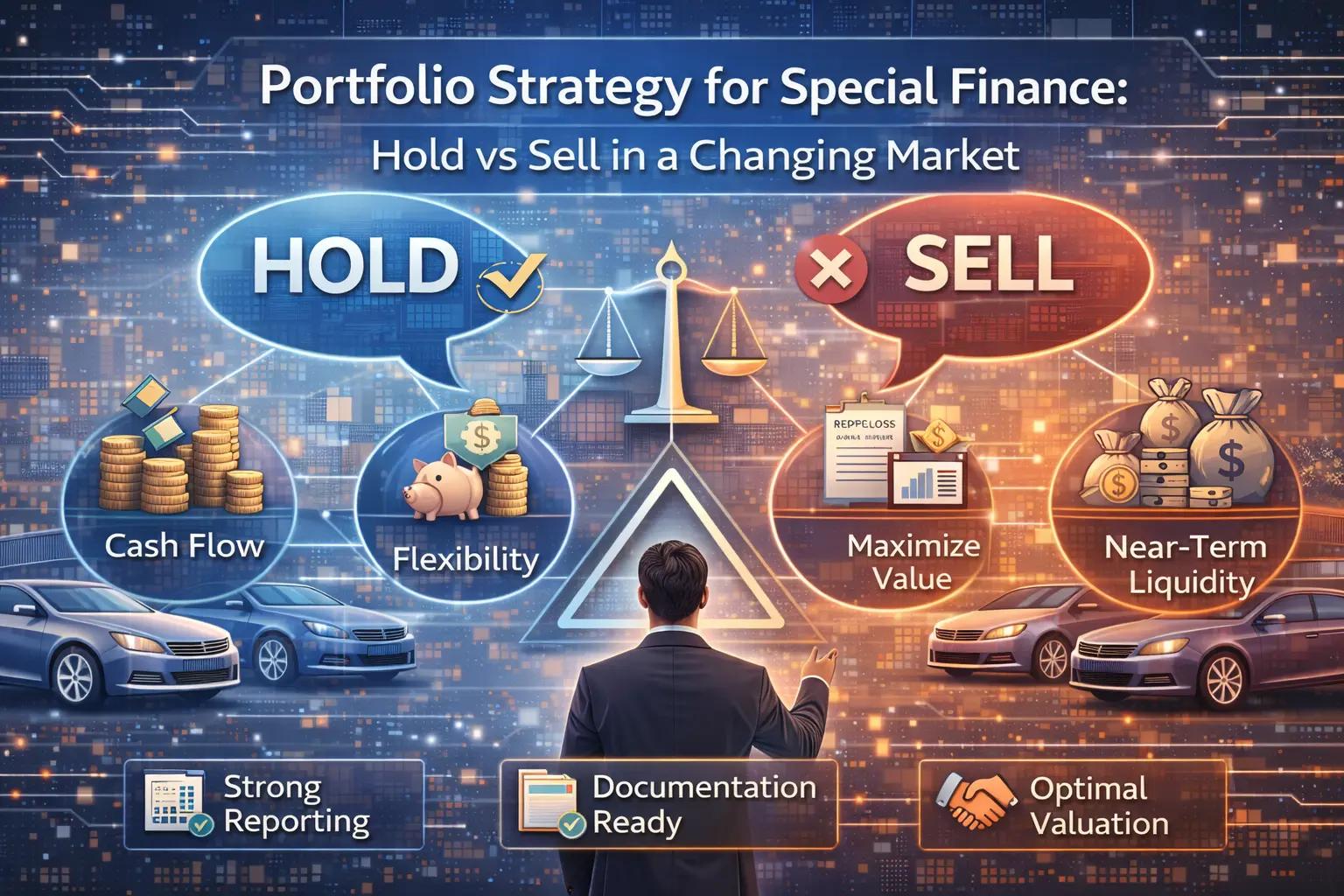
In the dynamic and often unpredictable world of special finance, independent auto dealers constantly face critical strategic decisions regarding their loan and lease portfolios. The choice between holding onto assets for long-term yield versus strategically selling all or part of a portfolio is not merely a reactive measure; it's a proactive strategy to manage risk, optimize liquidity, and fuel reinvestment. For an in-depth understanding of the market trends and strategic differences shaping LHPH and BHPH models, explore our pillar post: The Future of LHPH (Lease-Here Pay-Here): How It Compares to BHPH and How to Run Both Models Efficiently. This article provides a strategic blueprint for navigating the complexities of portfolio management in a changing market, emphasizing how robust reporting and meticulous documentation can enhance valuation and streamline any hold vs. sell decision.
The Problem: Uncertainty and Missed Opportunities in Portfolio Management
For many special finance dealerships, portfolio management can feel like navigating a minefield of uncertainty. Without clear data, standardized processes, and a forward-looking strategy, dealers risk:
- Suboptimal Valuation: When the time comes to consider selling a portfolio, a lack of clean data, incomplete documentation, and inconsistent reporting can significantly depress its valuation, leading to missed financial opportunities.
- Limited Liquidity: Without a clear strategy for unlocking capital through portfolio sales, dealerships may find themselves constrained in their ability to reinvest in inventory, facilities, or expansion.
- Unmanaged Risk: Holding onto a portfolio without a proactive risk assessment framework can expose the dealership to unforeseen market shifts, regulatory changes, or economic downturns that impact asset performance.
- Operational Inefficiency: Manual data aggregation, fragmented record-keeping, and a reactive approach to portfolio performance consume valuable time and resources, diverting focus from core business growth.
- Difficulty in Strategic Pivots: The ability to adapt to changing market conditions—such as a shift from a hold strategy to a sell strategy—is hampered by a lack of readiness and clear metrics.
Ultimately, a vague or reactive portfolio strategy leaves capital tied up, risks unmanaged, and significant profit potential untapped.
The Solution: A Strategic Portfolio Blueprint for Special Finance
The solution to navigating the complexities of special finance portfolio management lies in developing a strategic blueprint for both holding and selling. This proactive approach focuses on building a foundation of data quality, meticulous documentation, and consistent reporting from day one. By prioritizing audit readiness and a clear understanding of what drives portfolio valuation, dealerships can maintain optionality, maximize returns, and confidently make hold vs. sell decisions that align with their long-term business goals.
A well-defined portfolio strategy ensures that your assets are not just generating revenue, but are also being managed in a way that preserves and enhances their value. This blueprint empowers dealers to leverage their portfolios as a strategic tool, whether to fuel reinvestment, mitigate risk, or capitalize on market opportunities. It transforms portfolio management from a daunting task into a powerful lever for financial growth and stability.
Key Benefits of a Clear Portfolio Strategy
Implementing a well-defined portfolio strategy for your special finance operation offers profound advantages:
- Maximized Portfolio Valuation: Clean data, robust reporting, and comprehensive documentation significantly increase your portfolio's attractiveness and value to potential buyers, ensuring you get the best return if you choose to sell.
- Enhanced Liquidity Management: A clear hold vs. sell framework allows you to strategically unlock capital when needed for reinvestment, expansion, or managing market fluctuations.
- Proactive Risk Mitigation: By constantly assessing portfolio performance and market trends, you can identify and address potential risks before they impact your bottom line.
- Streamlined Operations: Standardized reporting and a centralized system of record reduce administrative burden, making portfolio analysis and preparation for sale far more efficient.
- Empowered Decision Making: With accurate, real-time data, you can make informed, confident decisions about when to hold, when to sell, and how to optimize your portfolio's performance.
- Improved Lender Relationships: Demonstrating robust portfolio management practices and data quality can strengthen relationships with lenders and financial partners.
- Strategic Adaptability: A flexible strategy allows your dealership to pivot quickly in response to changing economic conditions or shifts in your business objectives.
How It Works: Crafting Your Special Finance Portfolio Strategy
Developing an effective hold vs. sell portfolio strategy involves foresight, meticulous data management, and strategic decision-making.
1. Why Dealers Sell Portfolios (Risk, Liquidity, Reinvestment, Focus)
Understanding the motivations behind selling a portfolio is the first step:
- Risk Mitigation: Reducing exposure to market downturns, regulatory changes, or concentrated credit risk.
- Liquidity Generation: Freeing up capital for reinvestment in new inventory, facility upgrades, or other business opportunities.
- Reinvestment: Using proceeds to fund growth initiatives or acquire higher-yielding assets.
- Strategic Focus: Shifting focus away from servicing and collections to core sales activities.
2. What Buyers Care About
If selling is an option, you need to understand the buyer's perspective to prepare your portfolio optimally.
- Data Quality: Clean, accurate, and complete historical performance data is paramount. Buyers want to trust the numbers.
- Performance History: Consistent payment histories, low charge-off rates, and strong yields are highly valued.
- Documentation Completeness: A full, easily retrievable set of loan/lease documents for each account is non-negotiable.
- Servicing Continuity: Buyers want assurance that the portfolio has been well-serviced and that processes can be seamlessly transferred.
3. Preparing Your Book
Proactive preparation significantly enhances portfolio value and streamlines the sales process.
- Standard Reports: Regularly generate and maintain reports on key metrics: delinquency buckets, charge-offs, recovery rates, payment histories, and yield.
- Charge-Off and Recovery Clarity: Clearly document all charge-offs, repositions, and subsequent recovery efforts, including timelines and associated costs.
- Audit Trail Readiness: Ensure all customer interactions, payment activities, and document changes are logged and easily auditable.
4. How LHPH Changes Portfolio Thinking (Asset-Centric vs Note-Centric Dynamics)
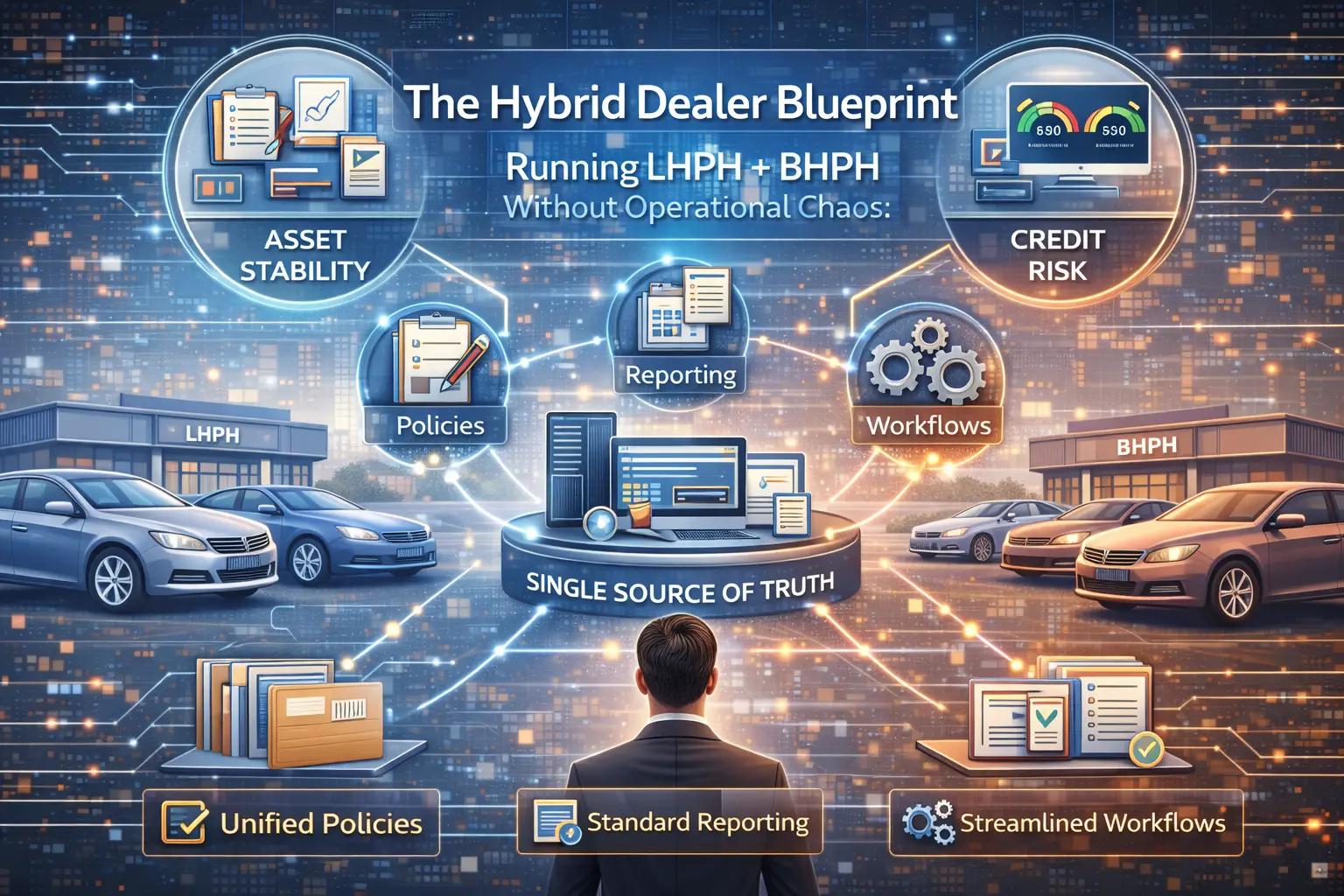
For LHPH, the portfolio evaluation includes the physical asset itself. Understanding how to manage these distinct models simultaneously is key, as explored in our guide on The Hybrid Dealer Blueprint: Running LHPH + BHPH Without Operational Chaos.
- Asset-Centric: Beyond the payment stream, the condition, re-lease history, and potential residual value of the vehicles in your LHPH portfolio become critical components of valuation.
- Note-Centric: For BHPH, the focus remains primarily on the performance and risk of the promissory note.
- Hybrid Impact: A hybrid portfolio combines both dynamics, requiring sophisticated tracking of both note performance and asset lifecycle.
5. Practical Readiness Checklist (What to Fix Before You Market a Book)
Before engaging potential buyers, address these key areas:
- Data Clean-up: Rectify any inconsistencies or gaps in your customer and portfolio data.
- Document Organization: Ensure all physical and digital documents are organized, complete, and easily accessible.
- Process Review: Verify that your servicing and collections processes are robust and clearly documented.
- Performance Optimization: Focus on improving key metrics like delinquency rates in the months leading up to a potential sale.
How DealerClick Supports Portfolio Readiness and Reporting
DealerClick provides the robust platform essential for effective special finance portfolio management, whether you plan to hold or sell. Our integrated system centralizes all critical data—from detailed payment histories and customer interactions to vehicle tracking and reconditioning costs. This ensures the data quality and audit trail readiness that buyers demand, enabling you to generate standard reports with ease and maximize your portfolio's valuation. Explore how DealerClick's powerful reporting tools can support your BHPH Guide and LHPH product features for comprehensive portfolio insights. For those considering a sale, our platform simplifies preparation, making your portfolio more attractive and reducing friction. You can also explore our portfolio selling services.
Conclusion: Empowering Your Portfolio Decisions in Special Finance
In the evolving special finance market, a well-defined portfolio strategy—whether to hold or sell—is paramount for sustained success. It's not just about reacting to market conditions but about proactively positioning your dealership to capitalize on opportunities, manage risk, and optimize capital. By committing to data quality, meticulous documentation, and a clear understanding of valuation drivers, you transform your portfolio from a collection of assets into a powerful strategic lever.
Embracing robust portfolio management, supported by integrated technology like DealerClick, ensures that your dealership can confidently navigate the complexities of hold vs. sell decisions. Empower yourself with the insights needed to make informed choices, enhance your portfolio's value, and secure your financial future in special finance.
Ready to optimize your special finance portfolio strategy for maximum value and flexibility?
Frequently Asked Questions (FAQs)
Why is data quality so important when selling a portfolio?
Data quality is paramount because buyers rely heavily on accurate and complete historical performance data to assess risk and determine valuation. Inaccurate or missing data creates uncertainty, which typically leads to lower offers or a reluctance to purchase the portfolio. Clean data demonstrates transparency and reduces buyer due diligence efforts.
What are the key reports needed to prepare a portfolio for sale?
Key reports include detailed payment histories for all accounts, delinquency aging reports, charge-off and recovery summaries, yield analyses, and reports on customer demographics and vehicle information. Comprehensive, standardized reports provide buyers with the necessary insights into the portfolio's performance and risk profile.
How does LHPH affect the hold vs. sell decision compared to BHPH?
LHPH introduces an asset-centric dynamic. When selling an LHPH portfolio, buyers will not only evaluate the payment stream but also the condition, re-lease potential, and residual value of the underlying vehicles. For BHPH, the focus is more purely on the note's performance. This means LHPH portfolios require more detailed asset documentation.
What does "audit trail readiness" mean for portfolio management?
Audit trail readiness means maintaining comprehensive and easily retrievable records of all material actions, customer interactions, payment activities, and document modifications related to every account in the portfolio. This transparency is crucial for due diligence during a sale and for demonstrating compliance to regulators.
How can DealerClick assist in preparing a portfolio for sale?
DealerClick's integrated platform centralizes all critical data—from detailed payment histories and customer interactions to vehicle tracking and reconditioning costs. It allows for the generation of standardized reports, ensures documentation completeness, and maintains a robust audit trail, all of which are essential for maximizing portfolio valuation and streamlining the selling process.
Stay Updated
Get the latest auto dealer insights delivered straight to your inbox.
No spam. Unsubscribe anytime.