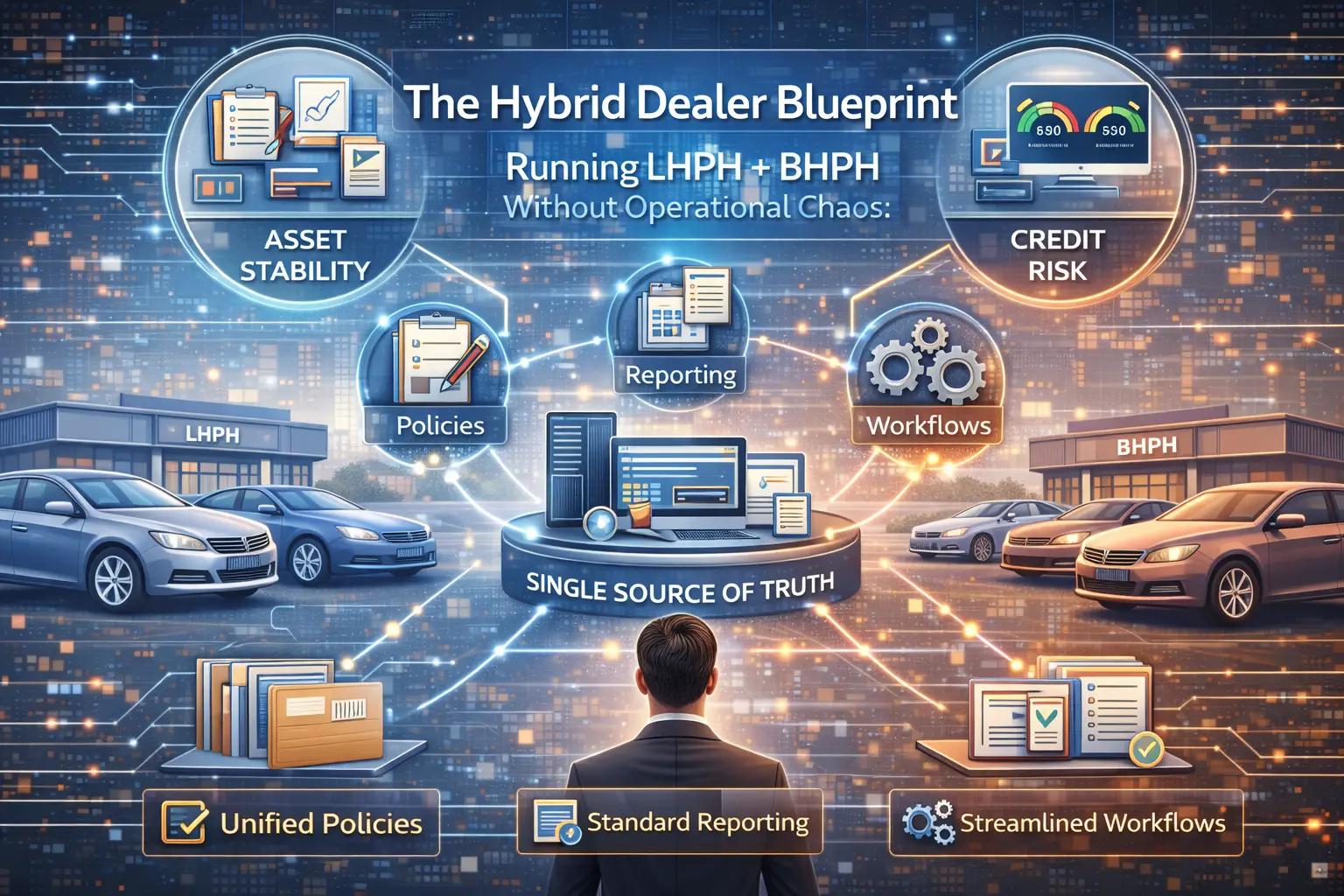
RTO vs. BHPH: Choosing the Right Business Model for Your Dealership
Deciding between Rent-to-Own (RTO) and Buy-Here Pay-Here (BHPH) impacts everything from legal structure to customer relationships. This guide offers a comprehensive comparison to help your dealership choose wisely.

Introduction: The Growth of Alternative Financing and the RTO/BHPH Decision
The landscape of automotive financing has evolved significantly, with Rent-to-Own (RTO) and Buy-Here Pay-Here (BHPH) models offering crucial alternatives for customers unable to secure traditional loans. For dealership owners, choosing between these two distinct business models is a fundamental decision that profoundly impacts operations, compliance, capital requirements, and customer relationships. This comprehensive guide will dissect the nuances of RTO and BHPH, providing insights to help you determine which model best aligns with your dealership's goals and market conditions.
- [Internal Link to the RTO pillar post (RTO vs BHPH FAQ section)]
Fundamental Differences
While both RTO and BHPH serve the subprime market, their legal and operational foundations are distinct:
Legal Structure
- Ownership: In RTO, the dealership (lessor) retains ownership of the vehicle throughout the lease term, with the customer having an option to purchase at the end. In BHPH, the customer typically takes ownership from the outset, and the dealership holds a lien on the vehicle as a lender.
- Contract Type: RTO uses lease agreements, often regulated differently than credit contracts. BHPH involves installment sales contracts, subject to specific lending laws.
Regulatory Framework
Both are subject to state-specific regulations, but RTO often falls under leasing laws, while BHPH is governed by usury laws, truth-in-lending acts (TILA), and other credit regulations. Federal oversight, such as from the CFPB, can also apply to aspects of both.
Repossession Process
Due to the ownership distinction, RTO typically involves a simpler repossession process (reclamation of leased property) compared to BHPH, which often requires a formal foreclosure of a lien, potentially involving more legal hurdles.
Accounting & Taxation
The financial treatment of RTO (lease income, depreciation) differs significantly from BHPH (loan interest income, bad debt write-offs), impacting a dealership's balance sheet and tax strategy.
Operational Impact
The chosen model dictates key operational strategies:
Capital Requirements
RTO dealerships often require more working capital to hold a larger inventory as leased assets. BHPH dealerships primarily finance loans, which can sometimes be factored or sold, potentially freeing up capital.
Underwriting Philosophy
RTO underwriting focuses on the customer's ability to make regular lease payments and the collateral value, emphasizing asset control. BHPH underwriting assesses creditworthiness (albeit subprime) and the likelihood of loan repayment.
Collections Strategies
Collections in RTO leverage the asset control aspect. BHPH collections focus more on negotiating payment plans and managing the lien.
Customer Relationship
RTO customers have a long-term lease relationship with the option to own, fostering a different dynamic than the debtor-creditor relationship in BHPH.
Advantages of RTO
- Asset Control: Dealership retains ownership, providing greater control over the asset.
- Flexibility in Contracts: Often allows for more flexible payment structures and lease terms.
- Simpler Repossession: Generally, a less complex legal process to recover vehicles.
Advantages of BHPH
- Customer "Ownership" Perception: Customers often feel a stronger sense of ownership from day one.
- Potentially Higher Portfolio Value: A well-managed loan portfolio can be a valuable asset to sell or leverage.
The Hybrid Model: Best of Both Worlds?
Some dealerships explore hybrid models, often referred to as Lease-Here Pay-Here (LHPH), attempting to combine beneficial aspects of both. [Internal Link to LHPH hybrid post if applicable]
Making the Right Choice: Factors to Consider
The optimal business model depends on several factors:
-
Market: Your local competitive landscape and target customer demographics.
-
Capital: Your available capital for inventory, operations, and financing.
-
Risk Appetite: Your comfort level with asset risk vs. credit risk.
-
State Regulations: The specific laws governing RTO and BHPH in your operating states.
-
[External Link: Legal articles on RTO/BHPH distinctions]
-
[External Link: Industry analyses on market share of each model]
-
[Visual Idea: Comparison Table: "RTO vs. BHPH Key Differences"]
-
[Visual Idea: Infographic: "RTO/BHPH Decision Tree"]
Primary CTA: Talk to a specialist (business model strategy)
Stay Updated
Get the latest auto dealer insights delivered straight to your inbox.
No spam. Unsubscribe anytime.