BHPH Portfolio KPIs and Dashboards: What to Track Weekly (and When to Hold vs Sell Your Book)
In BHPH, portfolio performance is a weekly discipline, not a quarterly review. This guide defines essential KPI sets, dashboard structures, and critical decision points for holding versus selling your book in a changing market.
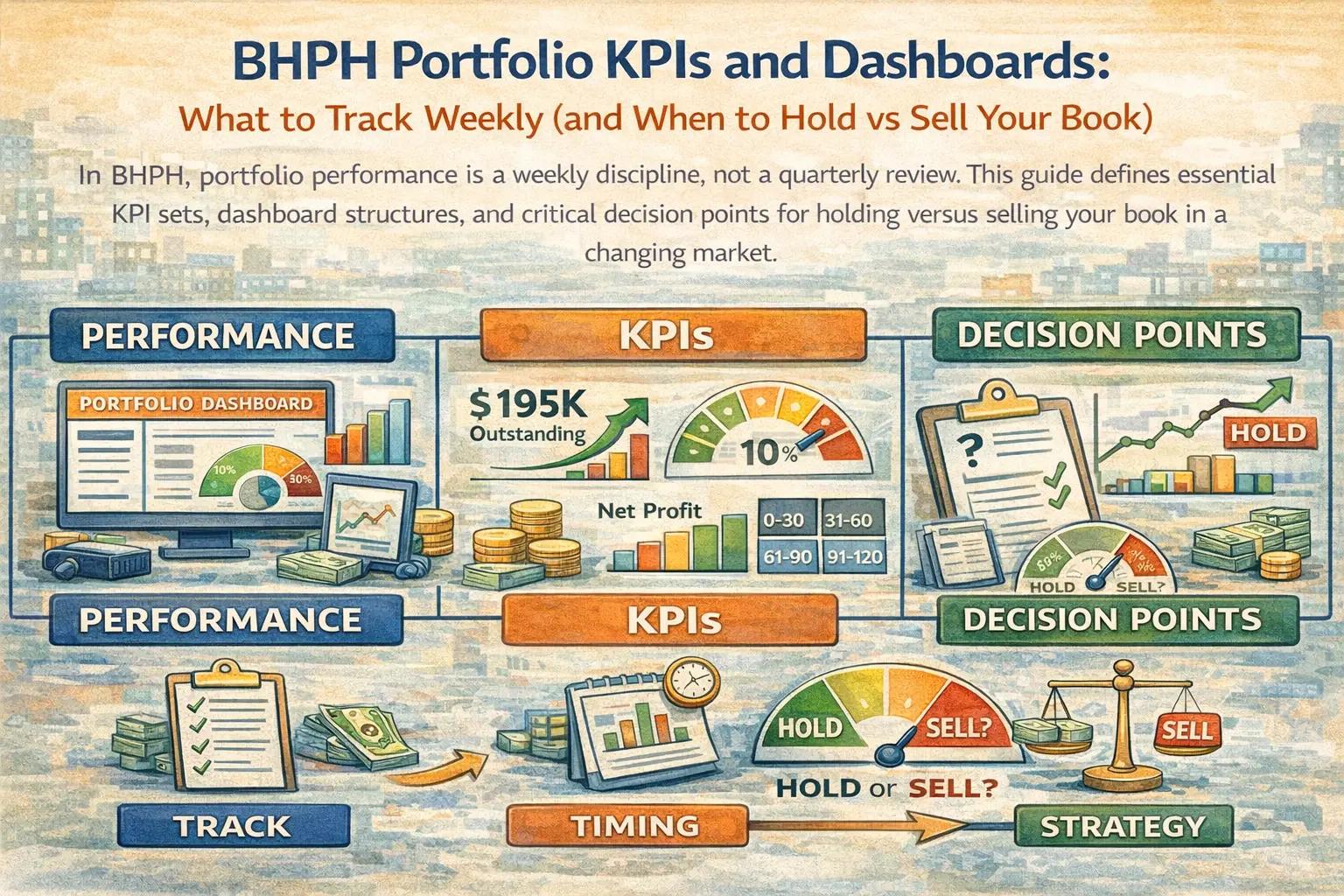
For Buy-Here Pay-Here (BHPH) dealerships, the portfolio is not merely a collection of loans; it is the core business model, demanding meticulous, ongoing management. True success in BHPH hinges on understanding portfolio performance with a weekly, granular focus, rather than relying on infrequent, high-level reviews. For a complete blueprint on launching a successful BHPH operation, including foundational insights into every operational aspect, refer to our pillar post: "Launching a Buy Here Pay Here Dealership: Complete Blueprint". This article defines the essential KPI set, outlines effective dashboard structures, and illuminates the critical decision points for when to hold your book for long-term yield versus when to strategically sell for liquidity or risk reduction in an ever-changing market.
The Problem: Reactive Portfolio Management Leads to Missed Opportunities and Losses
A common misstep in Buy-Here Pay-Here (BHPH) operations is a reactive approach to portfolio management, where dealers wait for quarterly or even annual reports to assess performance. This lagging perspective, often based on insufficient or outdated Key Performance Indicators (KPIs), can lead to significant financial consequences:
- Unidentified Risks: Slow-moving or incomplete data fails to highlight deteriorating trends in delinquency or charge-offs early enough, preventing proactive intervention.
- Suboptimal Capital Deployment: Without clear insights into portfolio health, dealers struggle to make informed decisions about reinvesting capital, leading to inefficient use of funds.
- Eroding Yields: Missed opportunities to adjust underwriting or collections strategies in response to real-time performance can result in a steady decline in overall portfolio yield.
- Poor Liquidity Planning: An unclear picture of future cash flows and potential losses can lead to unexpected liquidity crunches, hindering operational stability. Proactive budgeting for BHPH Startup Capital and Reserves is essential to avoid such crises.
- Difficulty in Valuation: When considering a sale, a portfolio lacking comprehensive, weekly performance data is difficult to value accurately, often resulting in lower offers.
- Policy Drift: Without constant feedback from portfolio performance metrics, underwriting and collections policies can drift, becoming inconsistent and less effective over time.
These challenges underscore why a proactive, data-driven approach, grounded in weekly KPI tracking, is paramount for sustainable BHPH profitability.
The Solution: Weekly Portfolio Discipline Through Strategic KPIs and Dashboards
The solution to overcoming reactive portfolio management in BHPH lies in adopting a discipline of weekly tracking through a strategic set of KPIs and dynamic dashboards. This proactive approach transforms abstract data into actionable insights, enabling dealers to monitor portfolio health in real-time, identify trends before they escalate into problems, and make informed decisions on a continuous basis. By defining a minimum viable KPI set and structuring intuitive dashboards, dealerships can maintain a constant pulse on their portfolio's performance.
Implementing weekly portfolio discipline ensures that underwriting strategies are continuously refined, collections efforts are optimized, and strategic decisions—like holding assets for long-term yield versus selling a book for liquidity—are made with confidence. This data-driven framework minimizes financial risks, maximizes profitability, and positions the BHPH dealership for resilience and growth in any market condition. For a deeper understanding of BHPH financial dynamics, consider reviewing our comprehensive guide: Buy Here Pay Here (BHPH) Financing.
Key Benefits of Proactive BHPH Portfolio Management
Adopting a strategy of weekly portfolio discipline with essential KPIs and dashboards offers numerous critical advantages:
- Early Risk Detection: Real-time tracking of delinquency buckets and roll rates allows dealers to identify deteriorating trends and intervene proactively, preventing minor issues from escalating into major losses.
- Optimized Cash Flow: Consistent monitoring of collections and net charge-offs provides clear visibility into cash flow, enabling better financial planning and operational stability.
- Enhanced Profitability: Granular insights into portfolio performance empower dealers to continuously refine underwriting and collections strategies, maximizing overall portfolio yield and reducing losses.
- Informed Hold vs. Sell Decisions: Robust data and clear decision points enable dealers to strategically assess when to retain a portfolio for long-term value creation versus when to sell for liquidity or risk reduction.
- Improved Underwriting Accuracy: A continuous feedback loop from portfolio performance KPIs directly informs and refines underwriting policies, ensuring future deals are structured for optimal risk-adjusted returns.
- Stronger Lender & Investor Confidence: Demonstrating meticulous, data-driven portfolio management signals financial sophistication and discipline, making your dealership more attractive to capital partners.
- Operational Efficiency: Automated dashboards and clear KPI definitions streamline reporting, reduce administrative burden, and allow management to focus on strategic interventions rather than data collection.
How It Works: Implementing Your BHPH Portfolio Strategy
Effective BHPH portfolio management relies on consistent monitoring of key metrics, a deep understanding of their implications, and a clear framework for strategic decisions.
1. Why “Portfolio Discipline” Is the Business Model
In BHPH, the portfolio is the business. Its performance dictates your cash flow, profitability, and long-term viability. Consistent, rigorous discipline in managing it weekly is not an option; it's the core operational philosophy.
2. Weekly KPI Set (Minimum Viable Dashboard)
Focus on a core set of actionable metrics for your weekly review:
- Delinquency Buckets + Roll Rates: Track accounts in 1-7 days past due, 8-15, 16-30, 31-60, 61-90+. Monitor the percentage of accounts rolling from one bucket to the next.
- Cure Rates and Promise-to-Pay Kept Rate: Measure the effectiveness of your collections efforts.
- Net Charge-Offs and Loss Rate: Track actual loan losses, net of recoveries, as a percentage of your portfolio.
- Recovery Rate and Time-to-Recovery: For repossessed vehicles, track the percentage of the outstanding balance recovered and the time it takes.
- Average Down Payment and Term Drift: Monitor if your underwriting policies are being consistently applied or if terms are creeping longer without sufficient down payments.
- Gross and Cash Collections vs. Forecast: Compare actual collections against your projections to identify cash flow deviations early.
3. Leading Indicators vs. Lagging Indicators (What Predicts Trouble Early)
Understand the difference between metrics that warn of future problems and those that confirm past events.
- Leading Indicators: High roll rates from early delinquency buckets, increasing broken promise-to-pays, declining autopay penetration.
- Lagging Indicators: High charge-off rates, low recovery rates, increasing average time to recovery.
Example: Leading vs. Lagging Indicators for Portfolio Health
Below is a conceptual graph illustrating the relationship between early warning signs (leading indicators) and confirmed portfolio issues (lagging indicators). (Note: In a live blog, this would be a dynamic or static infographic, showing two lines on a graph; one (leading) trending downwards before the other (lagging) confirms a problem.)
4. Underwriting Feedback Loop: How KPIs Change Policy
Your portfolio KPIs should directly inform and refine your underwriting standards.
- Analyze Performance by Underwriting Score: Identify if deals approved under certain score ranges or with specific criteria are performing better or worse than expected.
- Adjust Policies: Use this data to tighten or loosen down payment requirements, term limits, or even approve/deny criteria, ensuring your policies align with desired portfolio performance.
5. “Hold vs Sell” Decision Points
Strategic decision-making around your portfolio is critical for capital management.
- Liquidity Needs: If you require immediate cash for expansion, inventory, or operational expenses, selling a portion of your book might be necessary.
- Risk Reduction: If market conditions or portfolio performance indicate increasing risk, selling can offload exposure.
- Expansion Capital: Proceeds from a sale can fund growth, allowing you to originate new, potentially higher-yielding loans.
- Operational Capacity Constraints: If your collections team is overwhelmed, selling a segment of the portfolio can free up resources.
6. Data Readiness Checklist for Selling a Book (Clean Records Matter)
If selling is a future option, prepare your data now.
- Clean Records: Ensure all customer files, payment histories, and loan documents are meticulously maintained and easily accessible.
- Standardized Reporting: Have regular, accurate reports on key portfolio performance metrics ready to present to potential buyers.
How DealerClick Supports Dashboards, Exports, and Audit-Ready Reporting
DealerClick provides the robust tools essential for superior BHPH portfolio management. Our platform offers customizable dashboards that present your weekly KPIs at a glance, allowing you to monitor delinquency buckets, roll rates, and collections performance in real-time. With comprehensive reporting features, you can easily export audit-ready data for detailed analysis, refine your underwriting feedback loop, and confidently assess hold vs. sell decision points. DealerClick’s Buy Here Pay Here Dealer Software empowers you with the insights needed to manage your portfolio with unparalleled discipline. Explore our dedicated portfolio selling solutions for strategic book management, and our BHPH Financing guide for a broader context.
Conclusion: Mastering Your BHPH Portfolio for Enduring Profitability
In the BHPH industry, the portfolio is the ultimate arbiter of success. By embracing a strategy of weekly discipline, driven by a comprehensive set of KPIs and intuitive dashboards, dealerships can gain unprecedented control over their financial future. This proactive approach not only allows for early risk detection and optimized cash flow but also empowers confident decisions on when to hold your book for maximum yield versus when to strategically sell to capitalize on market opportunities.
Invest in the tools and processes that transform your raw data into actionable intelligence. With meticulous portfolio management and integrated solutions like DealerClick, your BHPH dealership can achieve enduring profitability, resilience, and a clear strategic advantage in a constantly evolving market.
Ready to elevate your BHPH portfolio management with precision KPIs and dashboards?
Frequently Asked Questions (FAQs)
Why is weekly tracking of BHPH portfolio KPIs critical?
Weekly tracking of BHPH portfolio KPIs is critical because it allows dealers to identify deteriorating trends in delinquency or charge-offs much earlier than less frequent reporting. This enables proactive adjustments to collections, underwriting, or payment policies, preventing minor issues from escalating into major financial losses and protecting overall portfolio health.
What is a "roll rate" in BHPH portfolio management?
A "roll rate" measures the percentage of accounts that transition from one delinquency bucket to a more severe one (e.g., from 1-7 days past due to 8-15 days past due). High roll rates are a leading indicator of ineffective early collections efforts or worsening portfolio health, signaling a need for policy adjustments.
How do "leading indicators" differ from "lagging indicators" in BHPH KPIs?
Leading indicators are metrics that predict future trends or problems (e.g., increasing broken promise-to-pays, rising early delinquency rates), allowing for proactive intervention. Lagging indicators confirm past performance or problems (e.g., high charge-off rates, low recovery rates), providing insights for long-term strategic adjustments but not for immediate action.
When should a BHPH dealer consider selling a portion of their book?
A BHPH dealer might consider selling a portion of their book to achieve various strategic goals, such as generating immediate liquidity for new inventory or expansion, reducing overall portfolio risk, or offloading accounts that exceed their operational capacity. The decision should be data-driven, considering current market conditions and the dealer's financial objectives.
How does DealerClick support BHPH portfolio KPI tracking and reporting?
DealerClick provides integrated, customizable dashboards and comprehensive reporting features that allow BHPH dealers to track essential KPIs like delinquency buckets, roll rates, charge-offs, and collections performance in real-time. Its tools help generate audit-ready data, enabling informed underwriting feedback loops and strategic decisions regarding holding versus selling the portfolio.
Stay Updated
Get the latest auto dealer insights delivered straight to your inbox.
No spam. Unsubscribe anytime.