BHPH Licensing, Bonds, and Insurance: What You Need Before You Sell Your First Car
Many dealers underestimate the time and complexity of BHPH licensing. Learn about essential requirements, bonds, insurance, and critical operational policies needed before selling your first car.
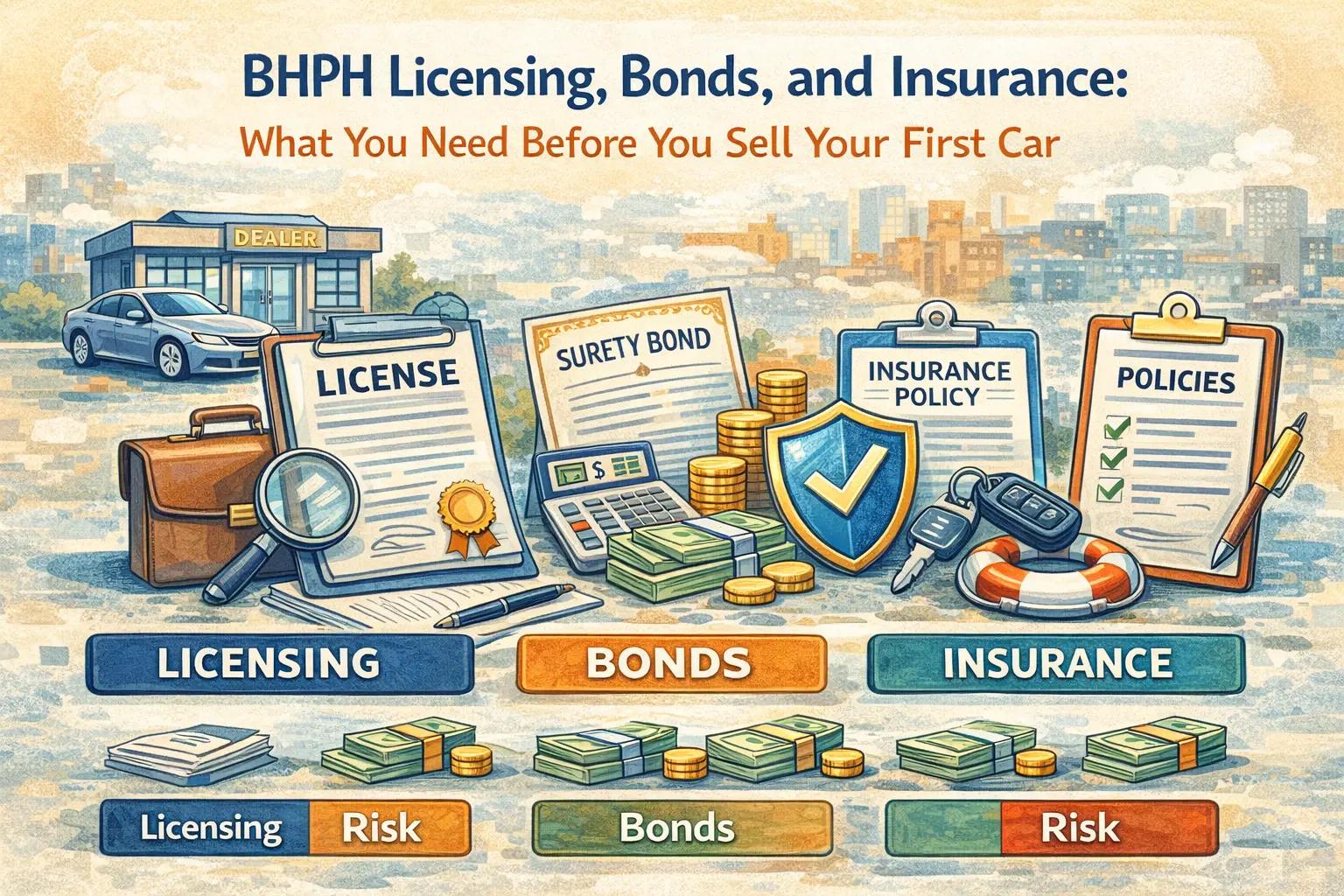
Embarking on the journey of establishing a Buy-Here Pay-Here (BHPH) dealership is an exciting venture, but one fraught with regulatory complexities that, if underestimated, can quickly derail your launch. Beyond securing a prime location and curating an initial inventory, understanding and meticulously navigating the labyrinth of licensing, bonding, and insurance requirements is paramount. For a complete, overarching blueprint to launching your BHPH operation successfully, delve into our pillar post: "Launching a Buy Here Pay Here Dealership: Complete Blueprint". This article serves as your indispensable checklist, guiding you through the critical steps of compliance, ensuring you have every document in order and every policy documented before you even think about selling your first car.
The Problem: Underestimating the Regulatory Maze of BHPH
Many aspiring and even experienced dealers new to the Buy-Here Pay-Here (BHPH) model often underestimate the sheer volume and complexity of regulatory hurdles. The expectation that opening a BHPH lot is similar to a traditional used car dealership can lead to significant oversights, resulting in:
- Delayed Launch: The licensing process alone can be extensive, with applications, background checks, and inspections consuming months, leading to lost revenue opportunities.
- Legal Penalties and Fines: Operating without proper licenses, bonds, or insurance, or failing to adhere to state-specific regulations, can result in hefty fines, license suspension, or even criminal charges.
- Reputational Damage: Compliance failures can severely impact a dealership's reputation, eroding customer trust and making it harder to attract and retain business. This also extends to collections, where a well-defined BHPH Collections SOP is crucial to mitigate compliance risks and ensure consistent customer interactions.
- Operational Gaps: A reactive approach to compliance means critical policies (like title handling, privacy, and record retention) are often undocumented, leading to inefficiencies and potential legal exposure.
- Increased Operational Costs: Remedial actions to correct compliance issues are often more expensive and time-consuming than proactive planning.
- Difficulty Securing Funding: Lenders and investors scrutinize a dealership's compliance posture. Gaps signal higher risk and can hinder capital acquisition.
These pitfalls underscore why a proactive, documented, and repeatable compliance strategy is essential for any BHPH operation from its inception.
The Solution: A Proactive, Documented Compliance Framework for BHPH
The solution to navigating the BHPH regulatory maze is a proactive, meticulously documented compliance framework, established well before your dealership opens its doors. This framework involves a strategic approach to understanding and fulfilling all local, state, and federal requirements for licensing, bonding, and insurance, coupled with the foresight to establish clear operational policies for critical areas like title handling, temporary tags, customer privacy, and record retention. By building a "documented and repeatable" mindset from day one, dealers can transform potential compliance headaches into streamlined, transparent workflows.
This comprehensive framework safeguards your dealership against legal risks, optimizes operational efficiency, and builds a strong foundation of trust with both regulators and customers. It ensures that every aspect of your BHPH operation is not only legally sound but also clearly understood by all staff, fostering an environment of compliance readiness that supports sustainable growth.
Key Benefits of Early Compliance Readiness in BHPH
Establishing a robust compliance framework from the outset offers profound advantages for your BHPH dealership:
- Accelerated Launch: Understanding and preparing for licensing requirements in advance helps streamline the approval process, minimizing delays and getting your dealership operational faster.
- Mitigated Legal & Financial Risk: Proper licensing, bonding, and insurance, coupled with documented operational policies, significantly reduce exposure to regulatory fines, lawsuits, and financial penalties.
- Enhanced Business Reputation: A proactive commitment to compliance builds a strong reputation for integrity and professionalism, attracting more customers and fostering long-term trust.
- Streamlined Operations: Documented policies for critical workflows (e.g., title and tag handling, privacy) reduce confusion, improve efficiency, and minimize errors, freeing up staff for core tasks.
- Stronger Funding Prospects: Demonstrating a clear understanding of regulatory obligations and a robust compliance program instills confidence in potential lenders and investors.
- Improved Customer Experience: Clear privacy policies and proper disclosure of all terms foster transparency, leading to greater customer satisfaction and fewer disputes.
- Scalable Growth: A compliance-ready foundation allows your dealership to grow and expand with confidence, knowing that your operations are built on solid legal ground.
How It Works: Your Pre-Launch BHPH Compliance Checklist
Building a compliance-ready BHPH dealership involves a methodical approach to various legal and operational requirements.
1. The BHPH Pre-Launch Compliance Mindset: “Documented and Repeatable”
Before you sell a single car, every critical process must be documented, understood by staff, and designed for consistent, repeatable execution. This mindset is your first line of defense.
2. Licensing Prerequisites (High-Level, State-Dependent)
Requirements vary significantly by state. Always consult local authorities and legal counsel.
- Entity, FEIN, Sales Tax Accounts: Establish your legal business entity, obtain a Federal Employer Identification Number, and register for state sales tax accounts.
- Dealer License Basics: This typically includes demonstrating a suitable business location (with proper signage and a permanent structure), passing inspections, and fulfilling pre-licensing education.
- Bonds, Fingerprints/Background Checks: Secure a dealer bond (amount varies by state) and ensure all principals undergo necessary fingerprinting and background checks.
3. Insurance Stack (High-Level)
Beyond standard business insurance, BHPH operations have specific needs.
- Garage Liability, Lot Coverage, Workers Comp: Standard for any dealership, covering accidents on premises, vehicle damage, and employee injuries.
- Cyber Liability: Essential for protecting sensitive customer data against breaches, given the volume of personal financial information handled.
- Lender’s Single Interest (LSI) Concepts: Insurance protecting the dealer’s financial interest in the vehicle if the customer fails to maintain their own insurance.
4. Policies You Should Document Before Day One
These operational policies are critical for compliance and efficiency.
- Title/Registration Workflow: A step-by-step process for ensuring timely and compliant transfer of titles and vehicle registration.
- Temp Tags Policy: Clear guidelines for issuing, tracking, and managing temporary tags according to state regulations.
- Privacy Notices and Consent Capture: Document how customer data is collected, used, stored, and protected, ensuring compliance with privacy laws (e.g., GLBA). Obtain explicit consent where required.
- Record Retention Standards: Define how long specific documents (contracts, payment histories, applications) must be retained, and ensure secure storage and retrieval capabilities.
Example: Typical Compliance Process Timeline
Below is a conceptual graph illustrating the sequential and parallel nature of BHPH compliance steps, emphasizing potential timelines. (Note: In a live blog, this would be a dynamic or static infographic, showing a flow chart or Gantt chart of compliance steps and their estimated durations.)
5. Staffing/Training: Who Owns What Compliance Step
Assign clear roles and responsibilities for compliance tasks.
- Designated Compliance Officer: Even if it's a dual role, someone needs ultimate oversight.
- Role-Specific Training: Ensure sales, finance, and administrative staff receive tailored training on compliance procedures relevant to their duties.
How DealerClick Helps: Central Docs + Compliance Workflow Consistency
DealerClick provides invaluable tools for establishing and maintaining a compliance-ready BHPH operation. Our platform acts as a central repository for all critical documents, ensuring approved templates are used, e-signatures are captured compliantly, and records are securely retained and easily retrievable for audit. The integrated workflow management features help enforce consistent application of your operational policies, from title processing to privacy notices. With DealerClick’s Buy Here Pay Here Dealer Software, you gain the peace of mind that your dealership is built on a foundation of regulatory adherence.
Conclusion: Building a Foundation of Trust and Compliance
In the competitive and highly regulated BHPH market, launching without a robust compliance framework is a significant gamble. By proactively addressing licensing, bonding, and insurance requirements, and meticulously documenting key operational policies, dealers can build a foundation of trust, mitigate legal risks, and ensure a smooth, efficient launch. This commitment to compliance readiness is not merely a hurdle to overcome; it's a strategic investment that safeguards your dealership's reputation and sets the stage for sustainable growth.
Embrace compliance as a core business principle from day one. With a well-structured approach and integrated tools, your BHPH dealership can navigate the regulatory landscape with confidence, allowing you to focus on serving your customers and growing your business.
Ready to ensure your BHPH dealership is compliance-ready from day one?
Frequently Asked Questions (FAQs)
Why is a BHPH dealer license different from a regular used car dealer license?
A BHPH dealer license often includes additional requirements because the dealer acts as both seller and lender. This dual role subjects the dealership to more stringent financial regulations, consumer protection laws, and reporting requirements related to lending and credit practices, necessitating specific compliance measures beyond those of a cash-only or third-party financed used car dealer.
What is a dealer bond and why is it required for BHPH?
A dealer bond (or auto dealer bond) is a type of surety bond required by many states for dealerships, especially BHPH operations. It acts as a financial guarantee that the dealership will comply with all state and federal regulations, protecting consumers from fraudulent actions or failures to fulfill contractual obligations. It provides recourse for consumers if the dealer acts illegally.
What are "Lender’s Single Interest (LSI)" concepts in BHPH insurance?
Lender’s Single Interest (LSI) insurance protects the dealer's financial interest in a vehicle when the customer fails to maintain their own physical damage insurance. If the vehicle is damaged or totaled, LSI can cover the outstanding loan balance, reducing the dealer's potential loss. It's crucial for BHPH as the dealer retains a direct financial stake in the collateral.
How does proper record retention impact BHPH compliance?
Proper record retention is vital for BHPH compliance because various regulations (e.g., TILA, ECOA, state laws) mandate keeping specific documents (contracts, payment histories, credit applications) for a defined period. Accessible and well-organized records are essential for demonstrating compliance during audits, resolving disputes, and defending against legal challenges.
How can DealerClick help streamline BHPH compliance?
DealerClick offers a centralized platform for document control, ensuring the use of approved templates, compliant e-signature capture, and secure record retention. Its integrated workflows help enforce consistent compliance procedures, from title processing to privacy notices. This reduces administrative burden, improves audit readiness, and helps BHPH dealerships navigate complex regulatory requirements efficiently.
Stay Updated
Get the latest auto dealer insights delivered straight to your inbox.
No spam. Unsubscribe anytime.