The Ultimate Guide to Powersports Dealer Management Software in 2026
Discover how modern powersports dealer management software serves as the nervous system of successful ATV, UTV, and marine dealerships in 2026—from inventory management to service operations.
TL;DR: Modern powersports dealer management software is the central nervous system of a successful 2026 dealership, integrating sales, service, parts, and F&I operations into a unified platform. Unlike generic retail or automotive solutions, specialized powersports DMS handles the unique complexity of ATV, UTV, marine, and motorcycle inventory, parts supersession, OEM integrations, and seasonal business cycles—enabling real-time intelligence that transforms how dealers operate, compete, and profit.

1. Introduction: The State of Powersports Dealerships in 2026
The powersports industry in 2026 is defined by a fundamental shift: dealerships that treat software as their competitive advantage are pulling away from those still relying on legacy systems and spreadsheets. The modern powersports consumer expects Amazon-level convenience—browsing inventory online, scheduling service appointments via text, and completing F&I paperwork digitally. Meanwhile, dealers face mounting pressures: compressed margins, complex OEM requirements, seasonal inventory challenges, and the operational complexity of managing thousands of parts SKUs alongside major units.
The Shift: Moving from "Legacy Records" to "Real-Time Intelligence"
The transformation from paper-based or legacy DMS systems to modern, cloud-based platforms represents more than a technology upgrade—it's a fundamental reimagining of how dealerships operate. Where legacy systems served primarily as digital filing cabinets, modern powersports DMS platforms function as operational intelligence centers. They don't just store data; they analyze it, automate workflows, and provide actionable insights that drive profitability.
In 2026, the most successful powersports dealers leverage real-time dashboards that show:
- Inventory turn rates by category (ATV vs. Marine vs. Street)
- Service department efficiency and billable hours
- Parts obsolescence and fill rates
- Lead response times and conversion metrics
- F&I penetration and per-vehicle revenue (PVR)
This shift from reactive record-keeping to proactive intelligence has become the defining factor separating high-performing dealerships from those struggling to compete.
The Complexity Factor: Why Generic Solutions Fall Short
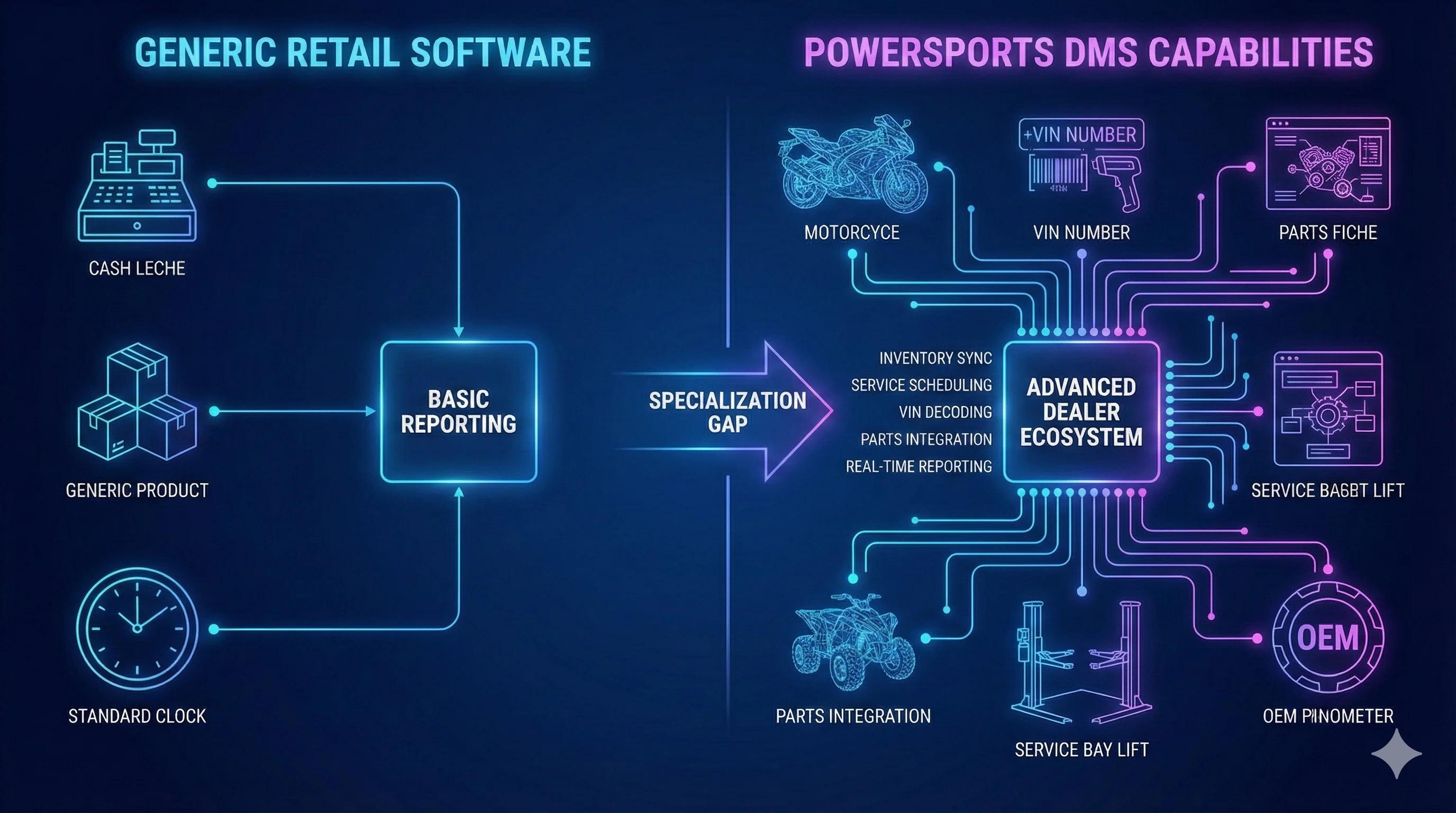
A common mistake among powersports dealers is attempting to force-fit an automotive DMS or generic retail management system into their operations. This "square peg, round hole" approach inevitably leads to frustration, inefficiency, and missed opportunities. Powersports dealerships face unique challenges that generic software cannot address:
- Multi-unit deals: A single transaction might include an ATV, trailer, helmets, riding gear, and an extended warranty—all requiring different inventory tracking, pricing, and warranty management.
- Parts complexity: Managing 50,000+ SKUs with year/make/model fitment across multiple OEMs (Polaris, BRP, Yamaha, Honda, Kawasaki) requires specialized catalog integration.
- Seasonal volatility: Spring rush vs. winter slowdowns demand predictive analytics and inventory planning that automotive systems don't provide.
- Service specialization: From flat-rate labor for accessory installation to complex warranty claims for manufacturers, powersports service operations operate differently than automotive repair shops.
The bottom line: in 2026, specialized powersports DMS software isn't a luxury—it's a fundamental requirement for operational efficiency and competitive survival.
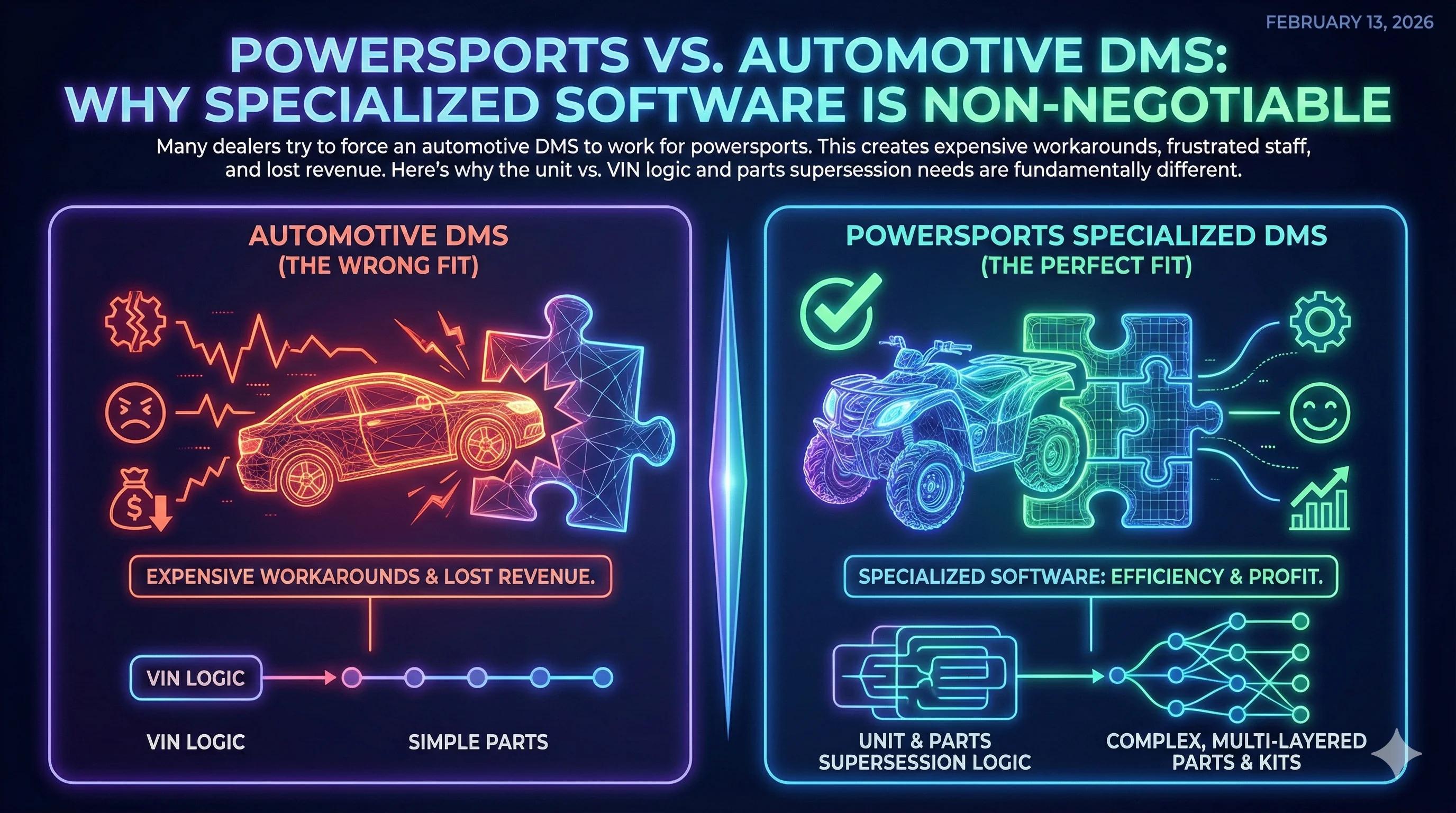
Wondering exactly where a generic DMS breaks down for powersports? Our detailed comparison of powersports DMS versus automotive DMS software walks through the unit-versus-VIN logic and parts supersession gaps that force costly workarounds.
2. What is Powersports Dealer Management Software (DMS)?
Definition & Scope: The Unified Platform
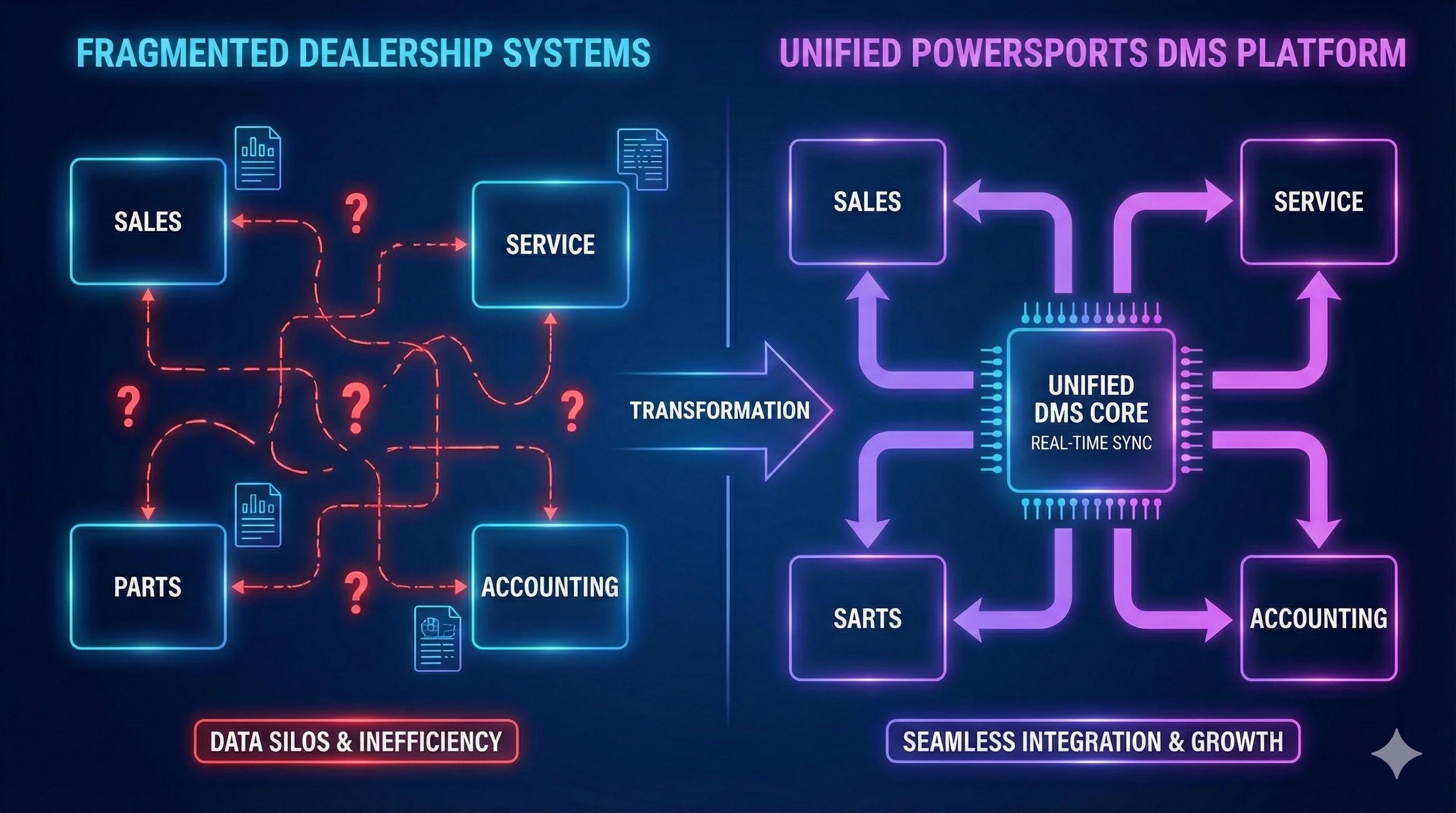
At its core, a Powersports Dealer Management System (DMS) is an integrated software platform that manages every operational aspect of a dealership—from the moment a unit arrives on your lot through its entire customer lifecycle. Unlike disconnected point solutions, a modern DMS creates a single source of truth that connects:
- Inventory Management: Real-time tracking of new and used units, accessories, parts, and merchandise
- Sales Operations: Deal structuring, credit applications, and customer relationship management
- Service & Repair: Work order management, technician scheduling, and parts integration
- Parts Department: Catalog management, ordering, receiving, and counter sales
- Finance & Insurance: Lender integration, contract printing, and compliance documentation
- Accounting: General ledger integration, receivables, payables, and financial reporting
- Customer Relationship Management (CRM): Lead capture, follow-up automation, and ownership lifecycle marketing
Core Utility: Why a Unified Platform Beats a "Patchwork" of Apps
Many dealerships operate with 10+ disconnected software tools: one for inventory, another for service, a third for accounting, separate point-of-sale systems, and various spreadsheets filling the gaps. This fragmented approach creates significant operational friction:
- Manual data entry and duplication: Staff waste hours re-entering the same customer or unit information across multiple systems
- Data inconsistencies: Different systems showing conflicting information about inventory counts, customer balances, or unit status
- Reporting challenges: Inability to generate consolidated reports or gain holistic insights into dealership performance
- Training complexity: New employees must learn multiple disconnected systems, increasing onboarding time and error rates
- Security vulnerabilities: More systems mean more passwords, more access points, and more potential security breaches
- Higher total cost: Multiple software subscriptions, integration fees, and IT support costs add up quickly
A unified DMS platform eliminates these challenges by providing a single, integrated system where information flows seamlessly between departments. When a sales team member structures a deal, the service department automatically sees the customer's purchase history, the parts department has access to unit specifications for ordering accessories, and accounting receives accurate transaction data without manual entry.
In 2026, this integration extends beyond internal operations—connecting with manufacturer portals, third-party listing sites (Cycle Trader, ATV Trader), digital marketing platforms, and financial services providers, creating an ecosystem that amplifies dealership efficiency.
3. Key Features Every Modern Powersports DMS Must Have
Unified Inventory Management: Real-Time Visibility Across All Asset Types
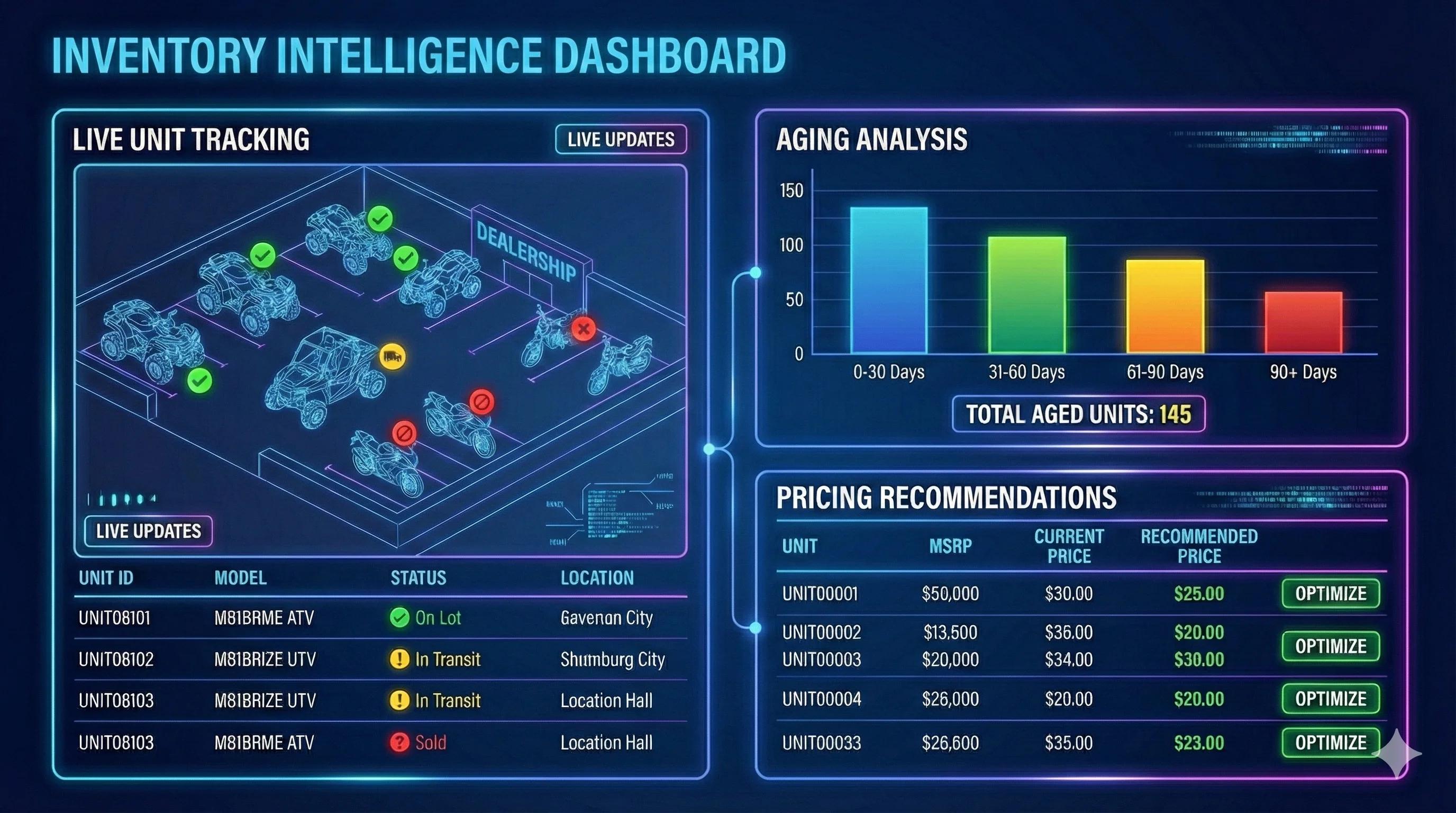
Modern powersports inventory management goes far beyond simple spreadsheet tracking. A capable DMS provides:
- Automated VIN decoding: Instantly pull manufacturer specifications, MSRP, and equipment details for ATVs, UTVs, motorcycles, marine vehicles, and trailers
- Multi-location tracking: Real-time visibility into which units are at which rooftop, in transit, or out on demo
- Used unit reconditioning workflows: Digital checklists and service order integration to track a trade-in from acquisition through web-ready status
- Aging reports and turn analysis: Identify slow-moving inventory before it becomes "lot rot"
- Photo and merchandising integration: Direct uploads to your website and third-party listing sites with one-click syndication
- Floor plan integration: Automated curtailment tracking and floor plan expense management for financed inventory
The most advanced systems in 2026 incorporate market-based pricing intelligence, automatically suggesting optimal pricing based on comparable units in your region and current market conditions.
Advanced Service & Repair Orders (RO): Streamlining the Service Bay
The service department represents a major profit center for powersports dealers—but only when managed efficiently. A comprehensive DMS service module includes:
- Digital repair orders: Tablet-based RO creation from the service counter or directly in the bay
- Flat-rate labor guides: Pre-loaded labor times for common services (oil changes, tire mounting, accessory installation)
- Parts integration: Direct lookup and allocation of parts from inventory as they're added to the RO
- Technician efficiency tracking: Monitor actual vs. billed hours to identify training opportunities
- Warranty claim management: Streamlined submission and tracking of manufacturer warranty claims with documentation
- Customer communication: Automated text message updates on service status, photo-based approval for additional work, and digital payment collection
- Service scheduling: Calendar integration with technician availability and bay capacity
- Recall tracking: Automatic notification when units with open recalls come in for service
In 2026, leading service departments use their DMS to capture an additional 0.5-1.0 billed hours per RO through improved workflow efficiency and reduced administrative time.
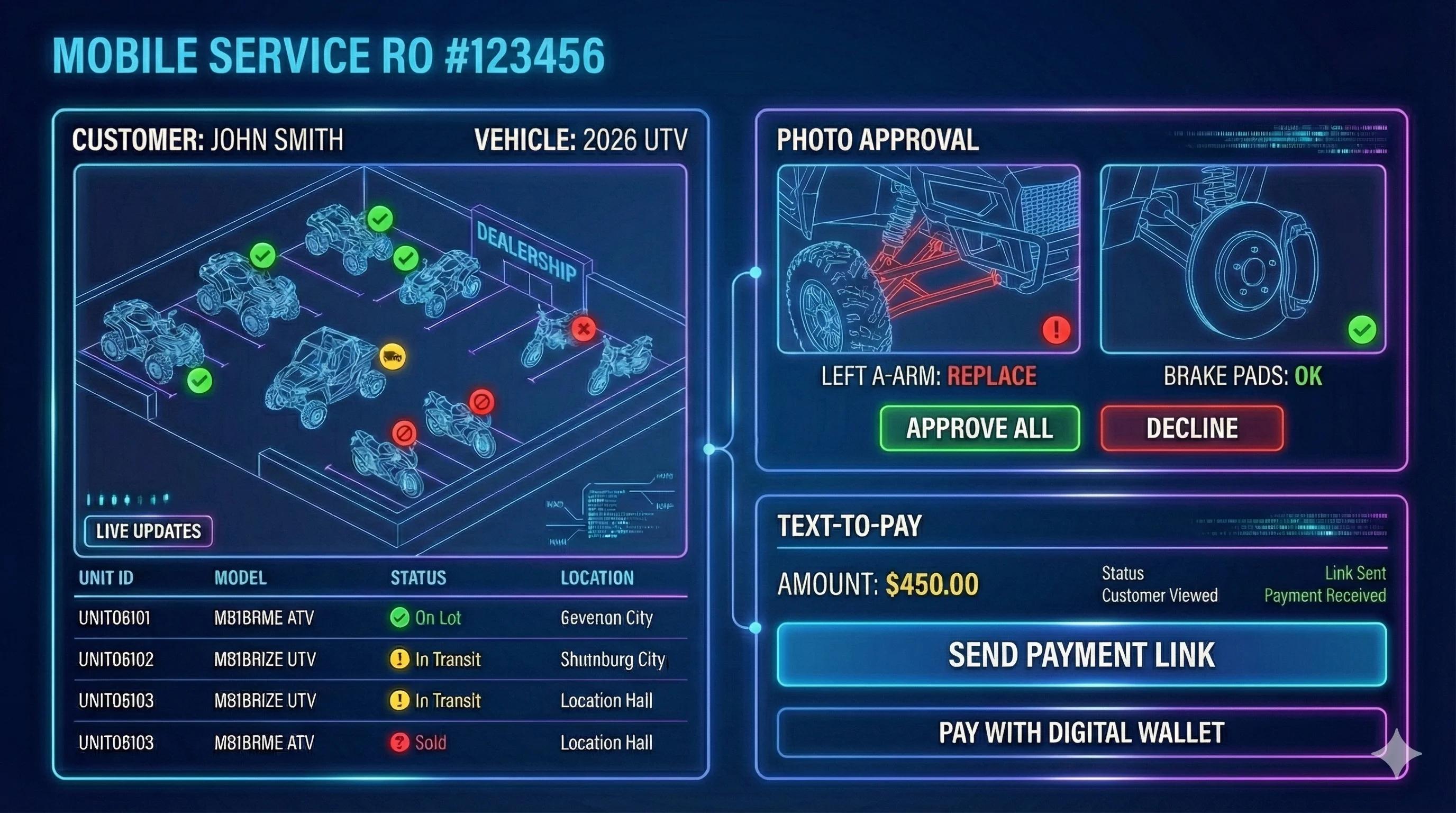
Tired of customers who won't answer the phone for a service update? See how text-to-pay and automated RO approvals reduce service friction for dealers moving away from phone-tag entirely.
Integrated F&I (Finance & Insurance): Accelerating the Deal Cycle
Finance and Insurance operations in powersports have unique requirements distinct from automotive F&I:
- Multiple lender integration: Direct connectivity with banks, captive finance companies, and specialty powersports lenders
- Deal structuring tools: Quick calculation of payments with varying down payments, terms, and rates
- Digital credit applications: Customer-facing tablet applications that flow directly into lender portals
- Menu selling: Product presentation tools for extended warranties, tire/wheel protection, and gap insurance
- Compliance management: Automated regulatory disclosures and document archival meeting FTC Safeguards requirements
- Contract printing and e-contracting: Generate all required paperwork with customer data auto-populated
- Backend tracking: Monitor F&I penetration rates, PVR (per-vehicle revenue), and product profitability
Modern F&I modules also integrate with digital retailing tools, allowing customers to structure their own deals online before arriving at the dealership, dramatically shortening the in-store closing process.
The Parts Powerhouse: Managing Complexity at Scale
Powersports parts management presents unique challenges that automotive DMS systems simply cannot handle effectively:
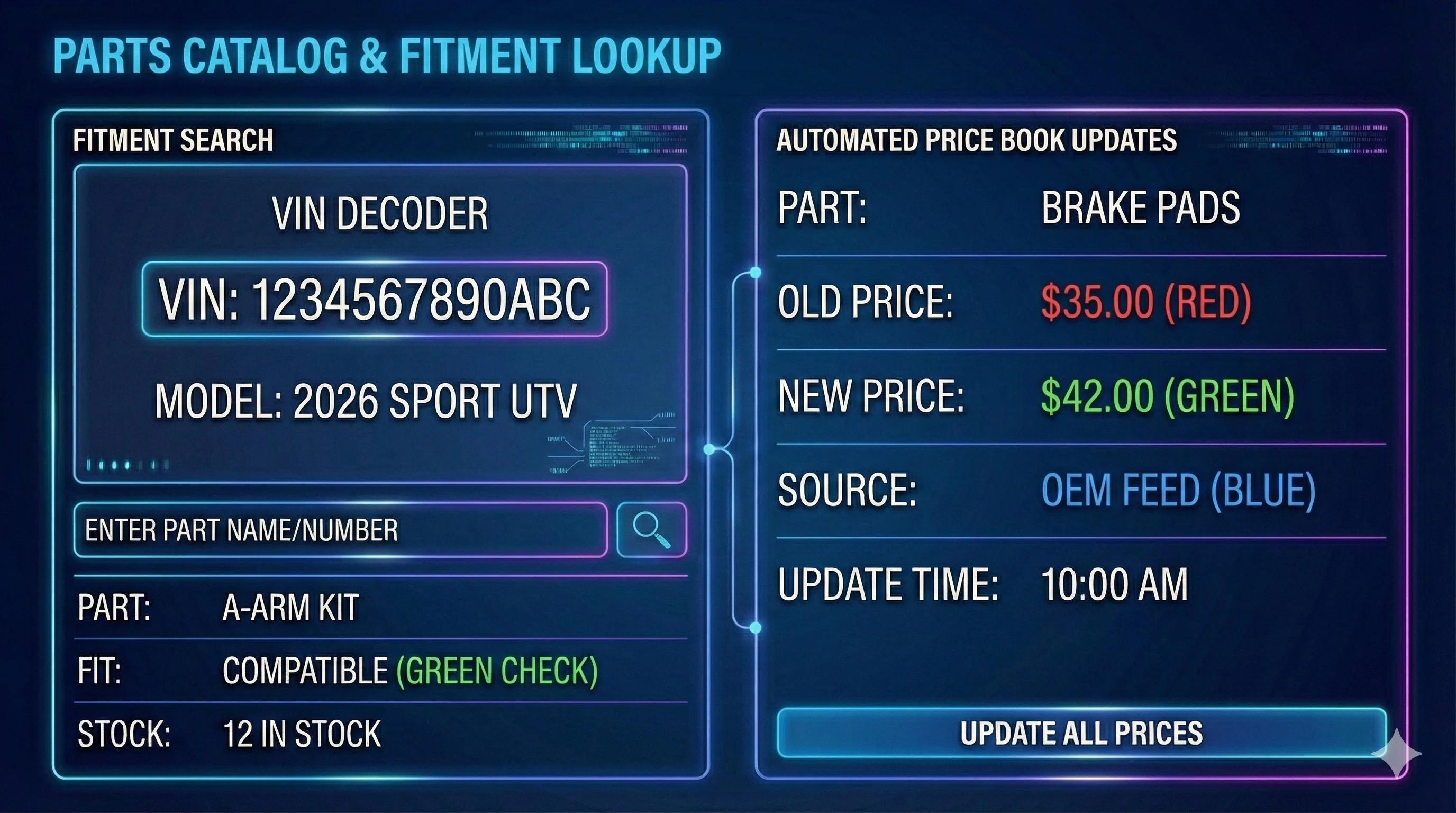
- Multi-OEM catalog integration: Automated price book updates from Polaris, BRP, Yamaha, Honda, Kawasaki, and aftermarket suppliers
- Supersession handling: Automatic part number updates when manufacturers change or discontinue SKUs
- Fitment lookup: Year/make/model search to find correct parts for specific units
- Special order management: Tracking customer-specific orders with deposit handling and arrival notifications
- Counter sales: Quick checkout for walk-in customers purchasing accessories, apparel, or maintenance items
- Stock optimization: Analytics on fast-moving vs. slow-moving parts to optimize inventory investment
- Core tracking: Management of returnable cores for items like starters and batteries
- Supplier integration: Electronic ordering and receiving with barcode scanning
The most sophisticated parts modules in 2026 use machine learning to predict seasonal demand patterns, automatically suggesting stock-up quantities for maintenance items before spring rush periods.
Embedded CRM: From Lead to Lifetime Customer
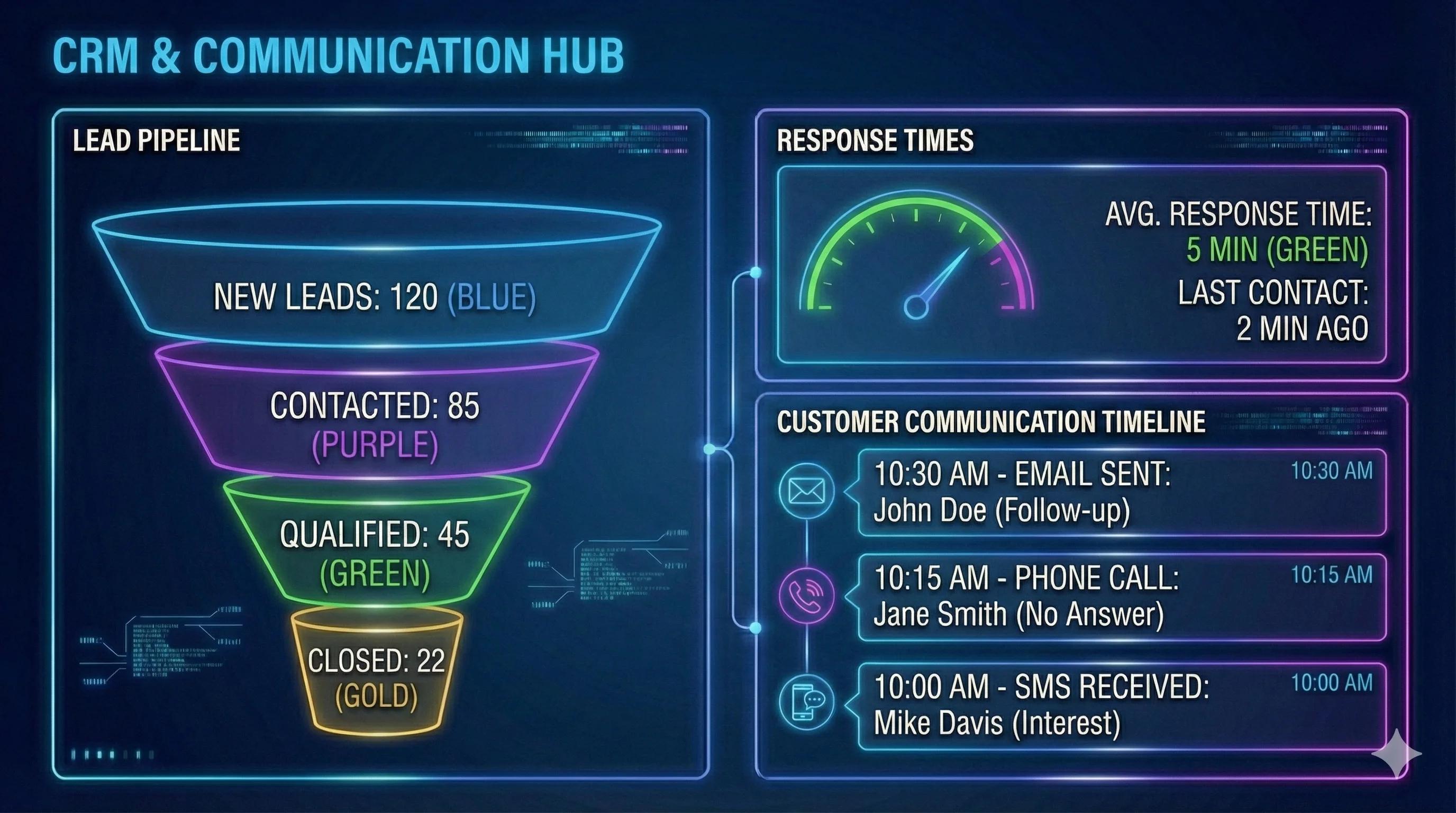
Customer Relationship Management in a powersports DMS goes beyond basic contact information:
- Multi-source lead capture: Integration with your website, Facebook, Cycle Trader, and third-party lead providers
- Automated lead assignment: Distribute incoming leads to sales staff based on availability, specialty, or rotation
- Lead response tracking: Monitor how quickly team members follow up (industry best practice: under 10 minutes)
- Communication history: Complete timeline of calls, texts, emails, and showroom visits
- Opportunity pipeline: Visual management of prospects through stages from initial contact to closed deal
- Ownership lifecycle marketing: Automated service reminders, seasonal promotions, and trade-in solicitation
- Referral tracking: Identify and reward customers who bring in new business
- Customer portal: Self-service access for customers to view purchase history, service records, and account statements
In 2026, the most effective CRM modules use AI-powered lead scoring to prioritize hot prospects and automated nurture campaigns to stay engaged with longer-cycle buyers without manual effort from sales staff.
Want to see where a lead actually comes from and where it goes next? Our marketing and lead operations guide for powersports dealers follows a listing from syndication through the CRM that tracks the customer afterward.
4. Solving Industry-Specific Challenges
OEM Integration: The Non-Negotiable Requirement
In powersports, your relationship with manufacturers like Polaris, BRP, Yamaha, Honda, and Kawasaki isn't just important—it's central to your business. "Gold-level" or certified DMS integrations with these OEMs provide critical capabilities:
- Automated price book updates: No more manual entry of MSRP changes, new model introductions, or parts catalog updates
- Warranty claim submission: Direct electronic submission of warranty claims with faster reimbursement
- Factory incentive tracking: Real-time visibility into holdback, floorplan credits, and sales incentives
- Compliance reporting: Automated generation of required dealer reports for manufacturer audits
- Model year changeover management: Structured workflows to handle new model introductions and prior-year inventory clearance
Dealers using DMS systems with deep OEM integration report 5-8 hours per week saved on administrative tasks, with fewer errors and faster warranty reimbursement cycles.
Without these integrations, dealers face constant manual updates, data discrepancies, and potential compliance issues during manufacturer audits. In 2026's competitive landscape, this operational friction can mean the difference between profitability and struggle.
Managing Seasonality: Predictive Analytics for the Power Sports Cycle
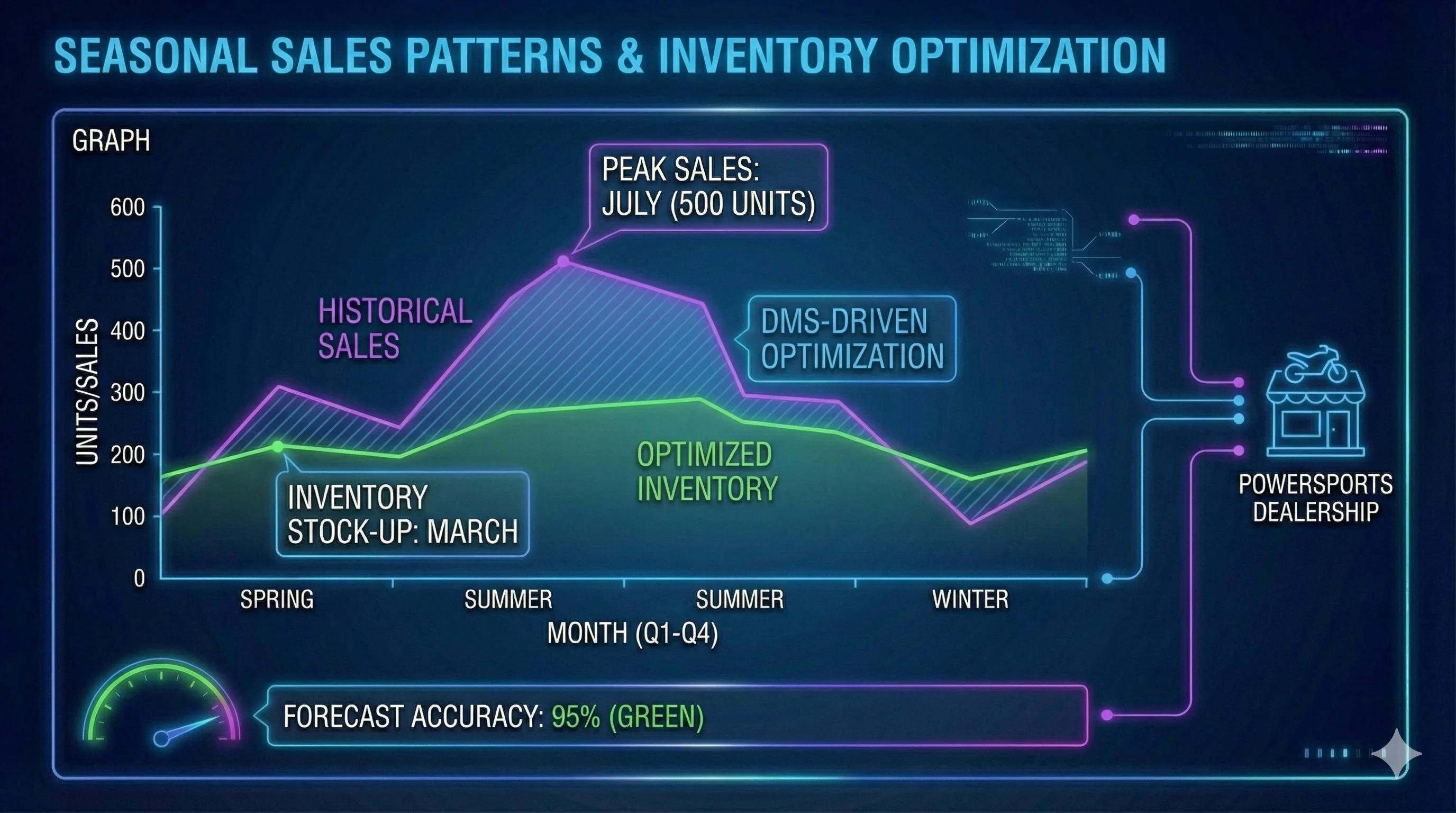
Unlike automotive dealerships with relatively consistent year-round demand, powersports dealerships experience dramatic seasonal swings. A specialized DMS helps navigate this volatility through:
- Historical sales pattern analysis: Compare current year performance against previous years by month, category, and model
- Inventory planning tools: Predictive recommendations for stocking levels based on anticipated seasonal demand
- Service workload forecasting: Anticipate service bay capacity needs during pre-season tune-up rushes
- Cash flow projections: Model the impact of seasonal variations on receivables and payables
- Parts inventory optimization: Increase maintenance parts stock before peak season, reduce after
- Marketing automation: Trigger seasonal campaigns (winterization services, spring sale events) based on calendar and weather patterns
Leading dealers in 2026 use their DMS not just to react to seasonality but to strategically capitalize on it—building inventory and staffing in advance of peak periods and maintaining customer engagement during slower months through targeted service and accessory promotions.
Planning inventory for the spring rush already? Our seasonal inventory strategy guide for powersports dealers covers pre-buy timing, regional demand patterns, and winterization stocking cycles.
Multi-Location Management: Centralized Control, Local Flexibility
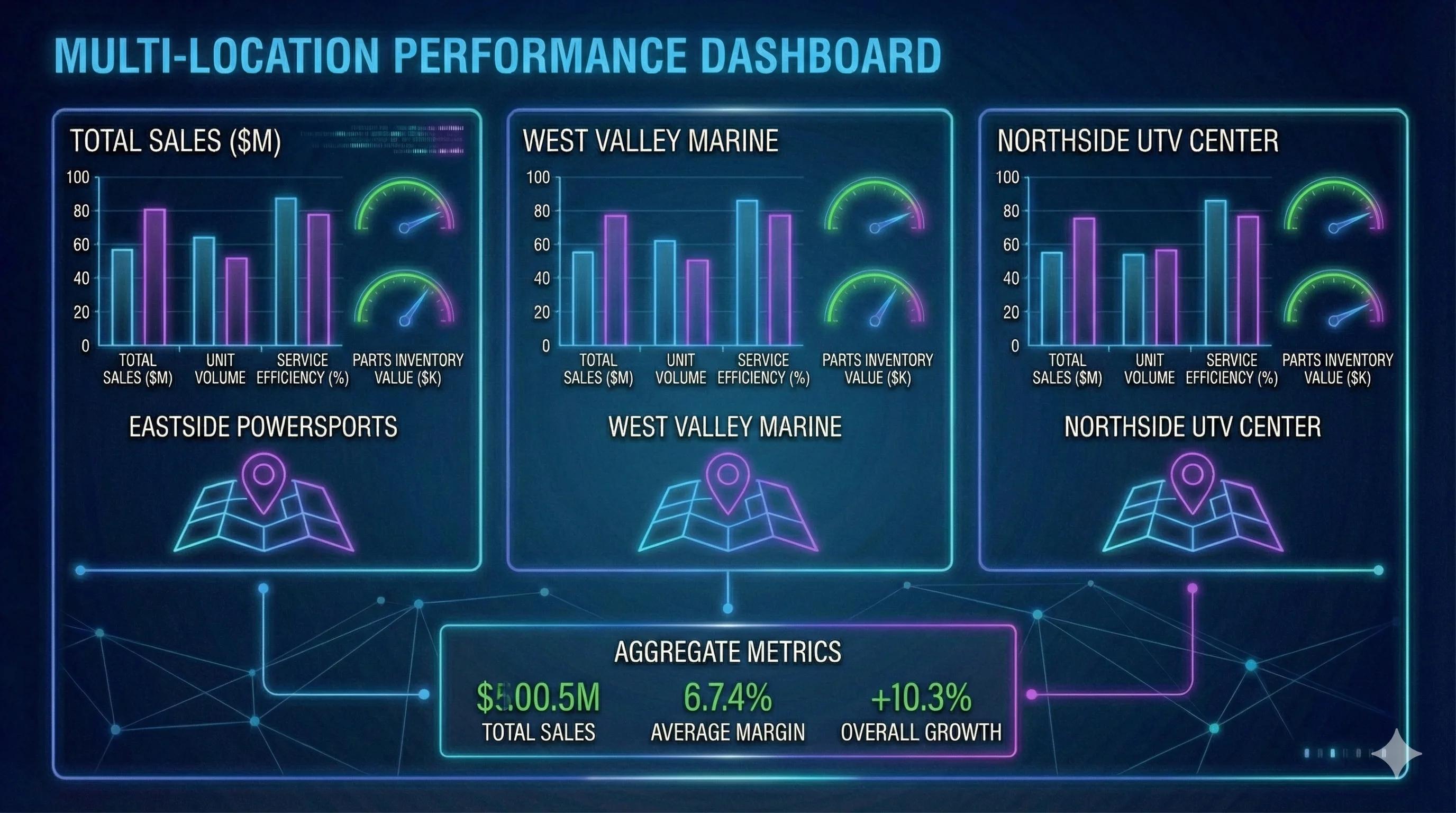
For dealership groups operating multiple rooftops—whether under the same brand or different OEM franchises—a modern DMS provides essential capabilities:
- Consolidated inventory visibility: View units across all locations, facilitating dealer trades and customer searches
- Centralized purchasing: Negotiate better pricing with suppliers through combined volume
- Standardized processes: Ensure consistent customer experience and operational best practices across locations
- Comparative performance metrics: Benchmark locations against each other to identify top performers and improvement opportunities
- Flexible role-based access: Grant appropriate permissions so location managers control their operations while corporate maintains oversight
- Inter-store transfers: Seamless movement of units, parts, and customers between locations with proper accounting
- Consolidated financial reporting: Roll-up financial statements while maintaining location-level detail for profitability analysis
Multi-location dealers consistently report that unified DMS platforms significantly reduce the administrative burden of operating multiple rooftops while improving both standardization and flexibility.
Running more than one rooftop and want the operational playbook? Our multi-location dealership management guide breaks down what stays local — customer data, labor rates, franchises — and what consolidates across a dealer group.
5. The "Tech Stack" of 2026: Mobile, AI, and Cloud
Mobile-First Dealerships: Untethering from the Desktop
The days of dealerships requiring staff to return to a desktop computer to complete transactions are over. In 2026, mobile-enabled DMS platforms empower:
Sales Teams:
- Conduct complete showroom presentations from a tablet, including inventory lookup, payment calculations, and credit applications
- Perform digital walk-arounds in the lot, capturing photos and videos that automatically attach to inventory records
- Close deals anywhere—in the customer's home, at a remote event, or during a demo ride
Service Technicians:
- Clock in/out of jobs directly from their phones
- Review work orders and parts lists on tablets mounted in the bay
- Document completed work with photos uploaded directly to the customer's service file
Parts Counter Staff:
- Look up fitment and availability for customers via tablet, even when helping multiple customers simultaneously
- Process counter sales with mobile point-of-sale capabilities
Management:
- Access real-time performance dashboards from anywhere
- Approve special pricing or deals remotely
- Review financial reports and inventory status while traveling between locations
Mobile enablement doesn't just improve convenience—it fundamentally changes the customer experience, allowing sales staff to provide immediate information and transact at the moment of maximum buying intent, rather than losing momentum with trips back to the office.

The Role of AI: From Automation to Prediction
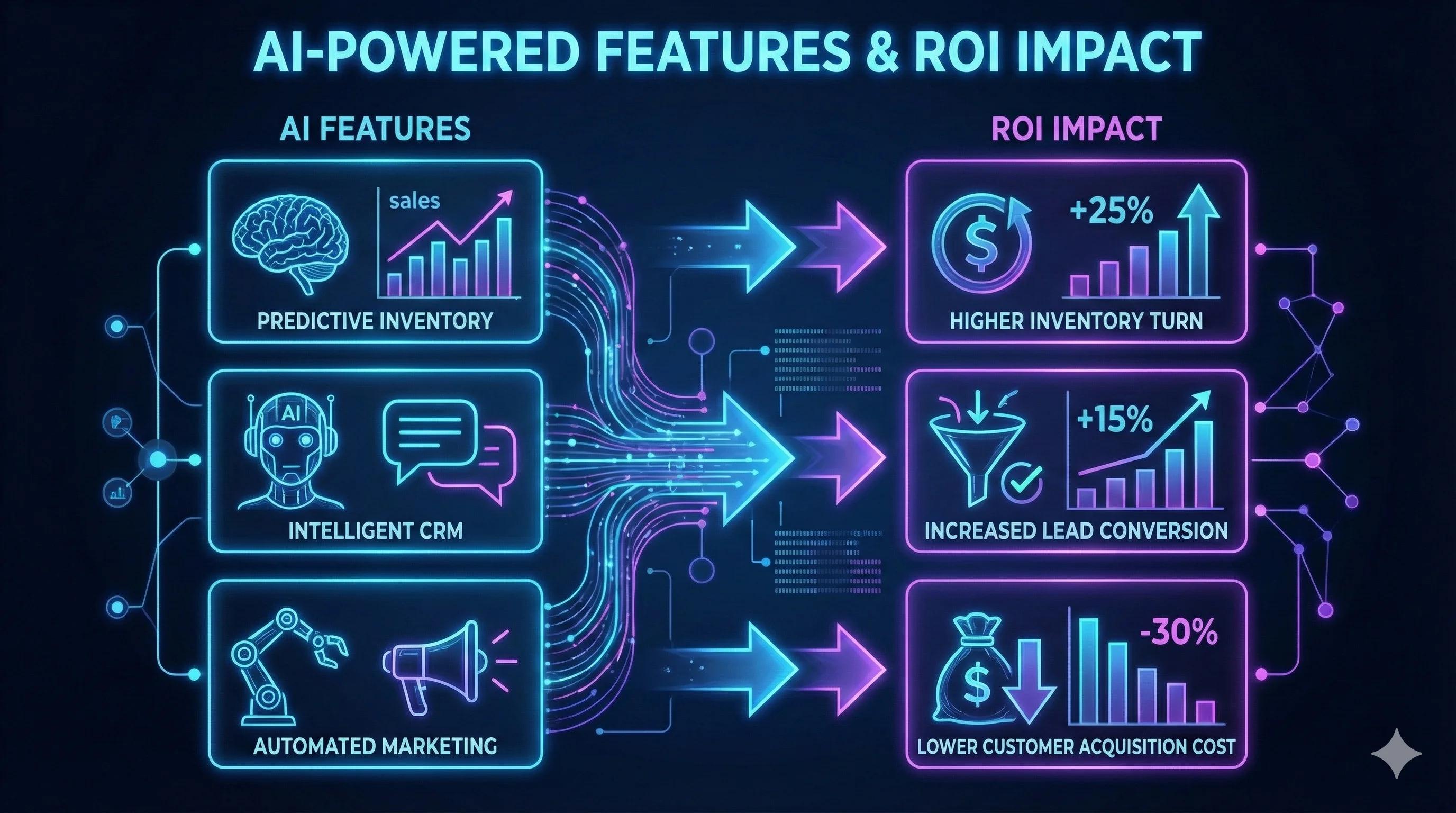
Artificial intelligence in powersports DMS platforms has evolved beyond buzzword status into practical, profit-driving applications:
Automated Lead Scoring: AI algorithms analyze hundreds of data points—lead source, customer demographics, inquiry details, browsing behavior, time of year—to predict which prospects are most likely to purchase soon. Sales teams can prioritize high-probability leads, improving close rates and reducing wasted effort.
Predictive Trade-In Timing: Machine learning models identify customers statistically likely to be in-market for a trade-in based on purchase date, mileage patterns, service history, and ownership behavior. Automated campaigns reach out at optimal moments, generating trade-in opportunities before customers visit competitor dealerships.
Dynamic Pricing Recommendations: AI-powered pricing engines continuously monitor market conditions, competitive listings, unit age, and seasonal factors to suggest optimal pricing for inventory. Dealers report 3-5% improvement in gross profit through AI-guided pricing strategies.
Service Demand Forecasting: Predictive analytics anticipate service bay capacity needs based on seasonal patterns, weather forecasts, and customer appointment history, enabling proactive staffing and parts inventory adjustments.
Chatbot and Automated Response: Natural language processing enables automated initial responses to common inquiries (hours, location, specific unit availability) with seamless handoff to human staff when needed, ensuring no lead goes unresponded while reducing administrative burden.
The key distinction in 2026 is that AI in DMS systems is no longer experimental—it's delivering measurable ROI through operational efficiency and revenue improvement.
Security & Compliance: Protecting Data in the Cloud
With the FTC Safeguards Rule requiring dealerships to implement comprehensive information security programs, cloud-based DMS platforms provide significant advantages:
Built-in Security Features:
- Automatic encryption of sensitive customer data (SSNs, financial information, driver's licenses)
- Multi-factor authentication for user access
- Role-based permissions limiting data access to only necessary personnel
- Automated security patch deployment without IT staff intervention
- Regular third-party security audits and penetration testing
Compliance Documentation:
- Automated audit trails showing who accessed what data and when
- Digital consent and disclosure records meeting regulatory requirements
- Secure document storage with retention policy management
- Automated data backup with disaster recovery capabilities
Business Continuity: Unlike on-premise systems vulnerable to hardware failure, theft, or natural disasters, cloud-based DMS platforms provide:
- Redundant data centers with automatic failover
- 99.9%+ uptime guarantees
- Accessible from any location if primary facility is compromised
- Automatic backups eliminating risk of data loss
For most powersports dealerships, managing security and compliance in-house is neither cost-effective nor practical. Modern cloud-based DMS platforms provide enterprise-grade security and compliance capabilities at a fraction of the cost of implementing them independently.

Need the compliance side spelled out — bills of sale, audit trails, and where the paperwork lives? Our compliance records guide for powersports dealers walks through what a dealer has to produce on demand and how DealerClick keeps it.
6. Measuring ROI: How Software Drives Profit
Reducing "Time-to-Line": The Inventory Velocity Advantage
One of the most measurable impacts of a modern DMS is dramatically reducing the time from unit acquisition to sale-ready listing—what industry professionals call "time-to-line." Every day a unit sits in reconditioning or waiting for data entry is a day of:
- Lost opportunity cost
- Accumulating floor plan interest expense
- Market depreciation
- Competitive disadvantage (someone else may sell a similar unit first)
How a Modern DMS Accelerates Time-to-Line:
- Mobile VIN decoding pulls complete specifications instantly when the unit arrives, eliminating manual research and data entry
- Automated service order creation generates reconditioning checklists and work orders immediately
- Integrated photo workflow allows staff to capture, edit, and upload merchandising photos directly to inventory records
- One-click listing syndication publishes to your website and third-party platforms simultaneously
Dealers implementing comprehensive DMS inventory workflows report reducing average time-to-line from 10-14 days to 3-5 days—more than doubling inventory turn rate and significantly improving cash flow. At scale, this improvement can represent hundreds of thousands of dollars in annual value through reduced floor plan expense and increased sales velocity.
Want the step-by-step playbook for getting units online fast? Our unit intake playbook covering VIN decoding and 48-hour web-ready workflows breaks down exactly how leading dealers hit that turnaround.
Service Efficiency: Maximizing Billable Hours
The service department's profitability hinges on a single metric: billable hours per technician. A specialized powersports DMS improves this crucial metric through:
Reduced Administrative Time: Digital repair orders eliminate paper-based processes and manual data entry. Technicians spend more time turning wrenches, less time completing paperwork. Industry data shows 20-30 minutes saved per RO through digital workflows.
Improved Parts Availability: Integrated parts lookup and allocation reduces trips to the parts counter and eliminates "come-backs" due to missing or incorrect parts. Technicians can confidently complete jobs without interruption.
Better Job Visibility: Service managers see real-time technician status and job progress, enabling optimal work assignment and identifying bottlenecks before they impact throughput.
Enhanced Upselling: Digital inspection checklists with photo capture make it easy to document and communicate additional needed services to customers, increasing approval rates for recommended work.
Accurate Time Tracking: Job clock-in/clock-out features provide precise actual-time data for each service, enabling continuous improvement of labor time estimates and technician training.
Dealers report service department efficiency improvements of 15-25% after implementing comprehensive DMS service modules—translating directly to bottom-line profit without adding staff or bay capacity.
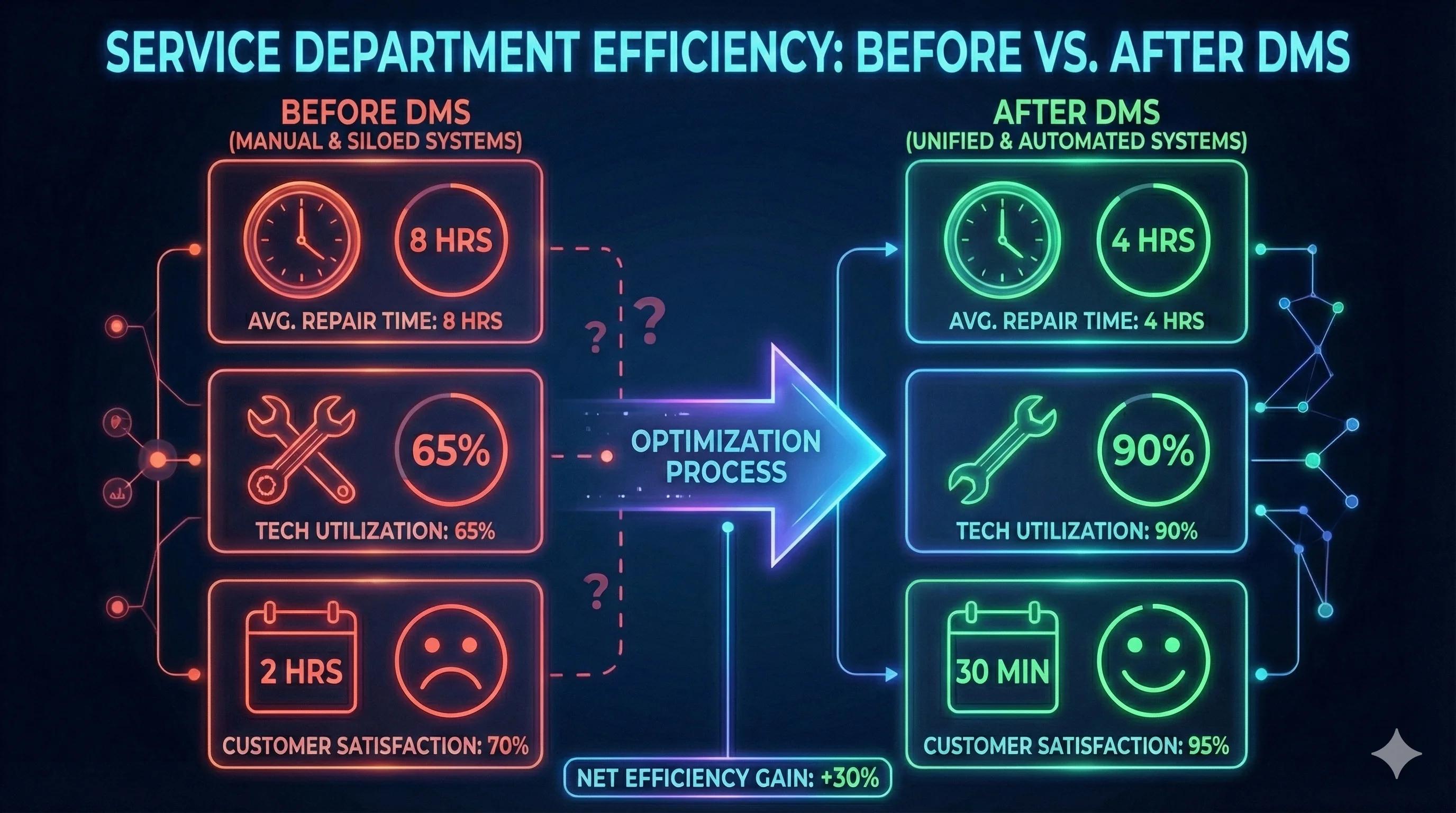
Want the repair-order-level breakdown of where service margin actually sits? Our service profit model guide for powersports dealers follows one repair order from appointment to parts attachment to the revenue report.
Data-Driven Decisions: From "Gut Feel" to Report-Backed Strategy
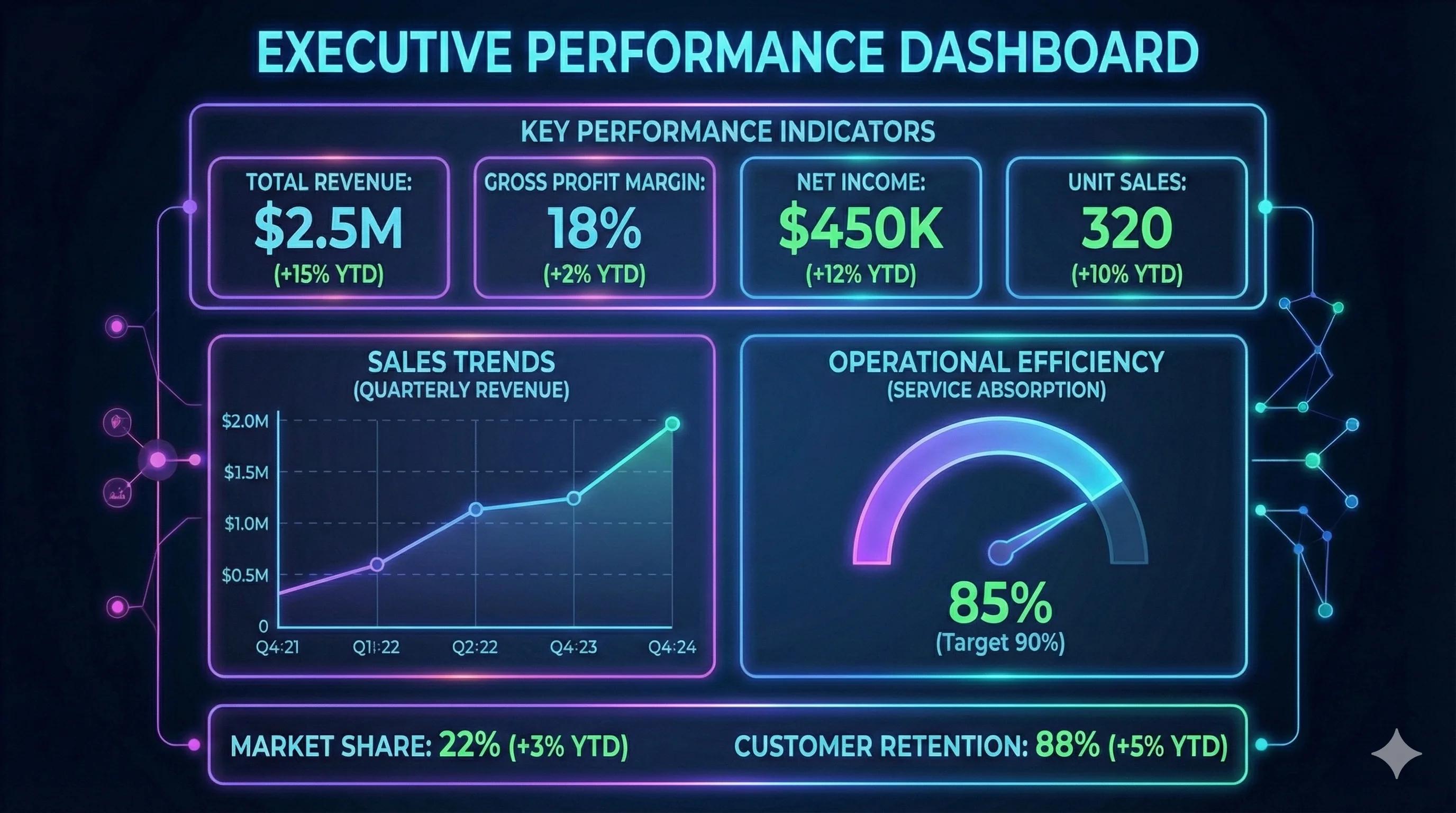
Perhaps the most transformative aspect of modern DMS platforms is the shift from intuition-based management to data-driven decision-making. Real-time dashboards and comprehensive reporting enable:
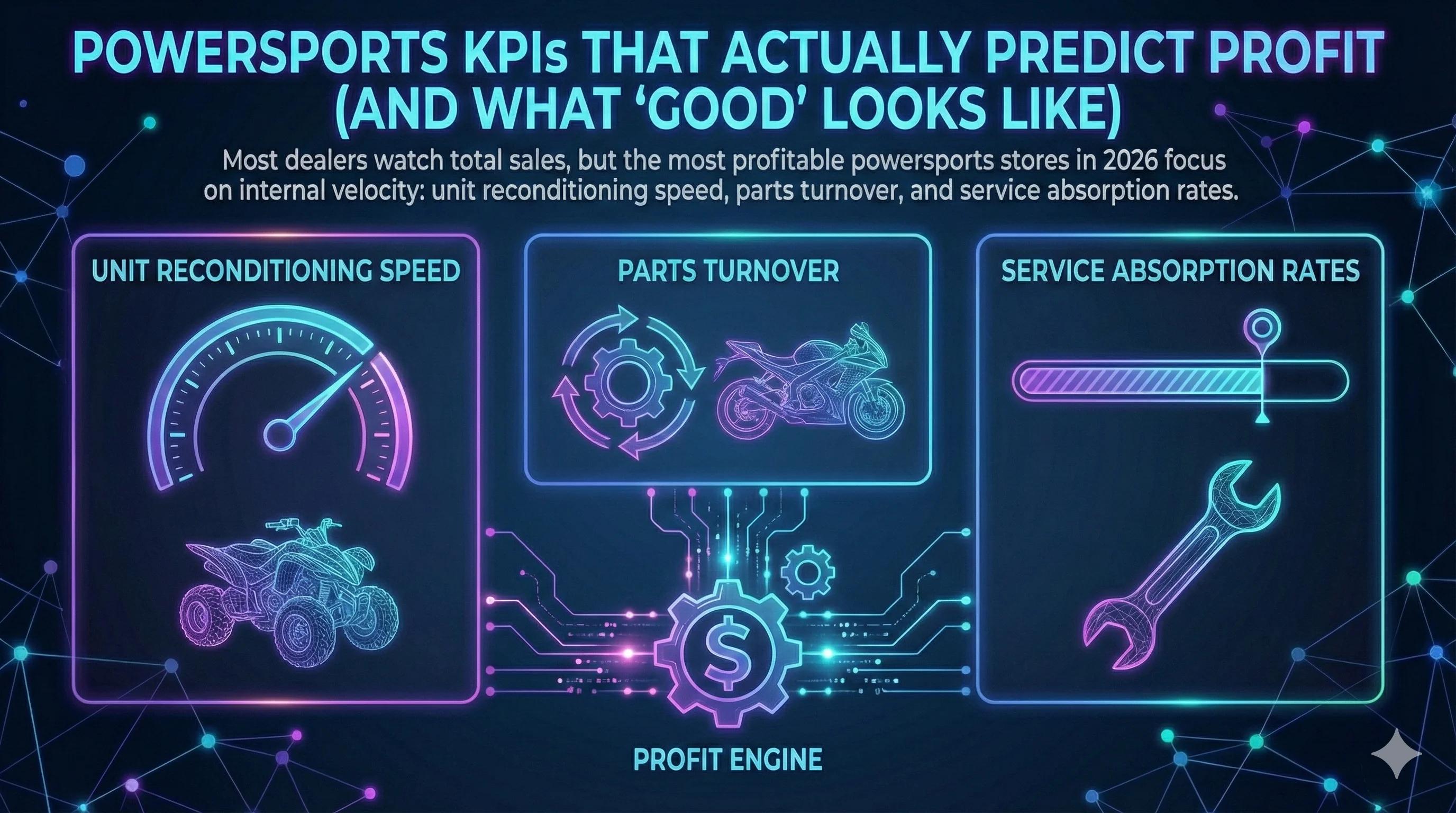
Want to dive deeper into the specific KPIs that drive profitability? Read our detailed guide on Powersports KPIs That Actually Predict Profit to learn what metrics top-performing dealerships track daily and what "good" performance looks like by dealership size.
Inventory Optimization: Know exactly which categories, brands, and models are turning fastest vs. aging on the floor. Make stocking decisions based on actual performance data rather than manufacturer pressure or personal preference.
Pricing Strategy: Analyze which units sell at asking price vs. requiring significant discounting. Identify optimal pricing sweet spots that balance gross profit with turn rate.
Marketing ROI: Track which lead sources and marketing campaigns generate the highest close rates and profitability. Shift budget toward proven channels and eliminate waste.
Sales Performance: Identify top-performing sales staff and analyze their behaviors for replication across the team. Provide coaching to underperformers based on specific metrics (lead response time, appointment show rate, close ratio).
Financial Forecasting: Use historical data and trend analysis to project cash flow, anticipate capital needs, and model the financial impact of potential decisions (adding a product line, opening a new location, hiring staff).
In 2026, dealerships operating without this data-driven insight are competing blind against rivals who leverage comprehensive business intelligence. The DMS isn't just operational software—it's a strategic advantage.
7. Choosing the Right Partner: A 2026 Checklist
Selecting a DMS platform is one of the most consequential decisions a powersports dealership can make. The wrong choice results in years of operational friction, staff frustration, and lost opportunity. Use this checklist to evaluate potential partners:
Ease of Use: Built for Your Team, Not IT Professionals
- Intuitive interface: Can a new employee be productive within days, not weeks?
- Context-appropriate design: Is the parts counter interface optimized for quick lookup? Is the service interface accessible from a tablet in the bay?
- Minimal training required: Does the system follow logical workflows that mirror how your team already works?
- Mobile optimization: Are mobile interfaces truly functional, or just desktop screens shrunk to fit a phone?
Request to watch actual users (not vendor demonstrations) performing common tasks. If it looks complicated, it will be complicated.
Industry Specialization: Powersports-Specific, Not Generic
- OEM integration: Does the vendor have certified integrations with your specific manufacturers?
- Parts catalog integration: Can the system handle supersessions, fitment lookup, and multi-OEM price books?
- Powersports terminology: Does the interface use industry language (major units, accessories, floor plan) rather than automotive terms?
- Accessory and merchandise handling: Can you efficiently manage the sale of helmets, riding gear, and other items alongside units?
- Current customer base: Do they have successful implementations with dealerships similar to yours?
Be wary of vendors claiming their automotive DMS "also works for powersports." The operational differences are significant enough that this approach inevitably leads to workarounds and compromises.
Support & Training: Your Success Partner, Not Just a Vendor
- Implementation approach: Do they offer white-glove data migration and go-live support, or expect you to figure it out?
- Training methodology: Are training sessions comprehensive and role-specific, or generic overview webinars?
- Ongoing support: What are typical response times for support requests? Is phone support available, or only email tickets?
- Account management: Will you have a dedicated account manager who knows your business, or a rotating support queue?
- User community: Is there an active community of dealers who share best practices and workflow tips?
The quality of support and training often matters more than feature sets. The best software poorly implemented delivers worse results than good software with excellent support.
Scalability: Growing With You
- Multi-location capability: If you plan to expand, can the system seamlessly handle multiple rooftops?
- User licensing: Is pricing structure reasonable as you add staff, or do per-user fees become prohibitive?
- API and integration options: Can the system integrate with future tools and technologies as they emerge?
- Performance at scale: Will the system maintain speed and responsiveness as your data grows over years of operation?
Even if you're a single-rooftop dealer today, choose a platform that can grow with your ambitions rather than one you'll need to replace as you expand.
Pricing Transparency and Total Cost of Ownership
- Clear pricing structure: Are all costs disclosed upfront, or do hidden fees emerge later?
- Implementation costs: What are one-time setup, data migration, and training fees?
- Ongoing costs: Monthly/annual subscription, support fees, transaction fees, user licensing?
- Optional modules: What features are included vs. additional cost add-ons?
- Contract terms: Are you locked into multi-year commitments, or can you adjust as needs change?
Calculate total 3-year cost of ownership, not just monthly subscription fees. The cheapest option upfront often proves most expensive over time when accounting for poor support, limited functionality, or expensive add-ons.
References and Reputation
- Customer references: Will the vendor provide contacts at similar dealerships you can speak with?
- Industry reputation: What do industry associations, online reviews, and dealer communities say about this vendor?
- Company stability: How long has the company been in business? Are they financially stable?
- Product roadmap: Is the vendor actively developing and improving the platform, or maintaining legacy technology?
The powersports DMS market has both established players and newer entrants. Balance innovation with proven reliability.
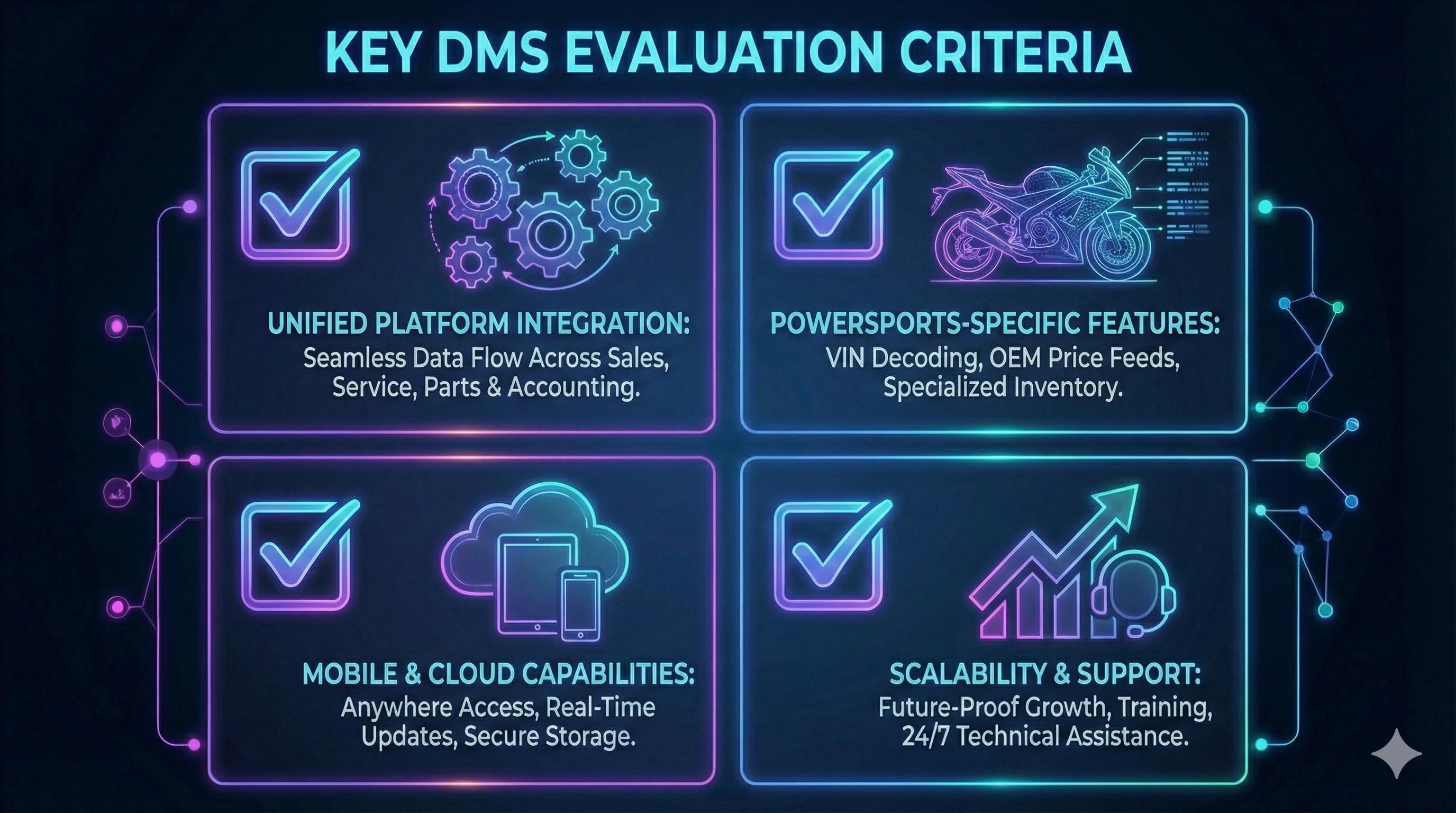
8. Conclusion: Future-Proofing Your Business
In 2026 and beyond, the dealerships that thrive will be those that recognize their DMS platform as strategic infrastructure, not just an operational necessity. The right powersports dealer management software doesn't just make your current processes faster—it fundamentally transforms your business model, enabling capabilities that were previously impossible:
- Real-time business intelligence replacing lagging indicators and gut-feel decisions
- Mobile operations that meet customers where they are, rather than requiring them to come to you
- Predictive analytics that help you anticipate market changes rather than merely reacting to them
- Seamless customer experiences that rival the best retail and e-commerce brands
- Operational efficiency that allows you to do more with your existing team
- Data security and compliance that protects your business and your customers
The competitive landscape is clear: dealerships leveraging modern, specialized powersports DMS platforms are capturing market share from those still operating with legacy systems or generic software. The gap will only widen.
If your current DMS—or lack thereof—is creating friction rather than enabling growth, the time to act is now. The investment in modern dealer management software delivers measurable returns through increased sales velocity, improved service profitability, better inventory management, and enhanced customer satisfaction.
Your next unit sold, your next service customer, your next strategic decision—all are opportunities to leverage technology as a competitive advantage. The question isn't whether to invest in modern DMS capabilities, but how quickly you can implement them to capture the benefits.
Ready to discover how specialized powersports dealer management software can transform your dealership?
Frequently Asked Questions (FAQs)
What makes powersports DMS different from automotive dealer software?
Powersports DMS is specifically designed for the unique operational needs of ATV, UTV, marine, and motorcycle dealerships. Key differences include: multi-unit deal handling (units + accessories + gear in one transaction), parts catalog integration with year/make/model fitment for 50,000+ SKUs, OEM-specific integrations for manufacturers like Polaris, BRP, Yamaha, and Kawasaki, seasonal inventory management tools, and specialized service workflows for powersports-specific repairs and maintenance. Automotive DMS systems lack these critical capabilities and require extensive workarounds that reduce efficiency.
How long does it typically take to implement a new DMS platform?
Implementation timelines vary based on dealership size and data complexity, but typical implementations range from 4-8 weeks. This includes data migration from existing systems, initial configuration, staff training, and go-live support. The most successful implementations follow a phased approach: starting with core inventory and sales functions, then progressively adding service, parts, and advanced features. Quality vendors provide dedicated implementation specialists who manage the process and ensure a smooth transition with minimal operational disruption.
Can a DMS integrate with my existing accounting software?
Most modern powersports DMS platforms offer integration with popular accounting systems like QuickBooks, Sage, and other general ledger software. Integration typically synchronizes customer accounts, vendor information, transaction data, and financial reporting, eliminating duplicate data entry and ensuring accounting accuracy. During vendor evaluation, verify the specific accounting system integrations available and understand what data flows automatically vs. requires manual export/import. Some dealers prefer DMS platforms with fully integrated accounting modules to eliminate integration complexity entirely.
What kind of ROI should I expect from DMS investment?
Measurable ROI from modern DMS implementation typically includes: 30-50% reduction in time-to-line for inventory (faster turns, reduced floor plan expense), 15-25% improvement in service department efficiency (more billable hours per technician), 5-8 hours per week saved on administrative tasks through automation, 3-5% improvement in gross profit through data-driven pricing, and improved lead conversion rates through faster response and better customer information. Most dealerships report that DMS investment pays for itself within 12-18 months through operational improvements and increased profitability. Beyond financial returns, improved staff satisfaction and reduced friction in daily operations provide significant intangible value.
How does cloud-based DMS compare to on-premise software?
Cloud-based DMS platforms offer significant advantages for most powersports dealerships: no server hardware to purchase or maintain, automatic software updates and security patches, accessibility from any location with internet connection, built-in disaster recovery and business continuity, enterprise-grade security infrastructure, and predictable subscription pricing vs. large upfront capital expenditure. The primary consideration for cloud DMS is reliable internet connectivity, though most platforms include offline modes for critical functions. In 2026, the vast majority of new DMS implementations are cloud-based due to superior security, lower total cost of ownership, and operational flexibility.
How important are OEM certifications and integrations?
OEM certifications and integrations are critically important for powersports dealerships. Certified integrations with manufacturers like Polaris, BRP, Yamaha, Honda, and Kawasaki enable: automated price book and parts catalog updates (saving hours of manual work weekly), direct warranty claim submission with faster reimbursement, factory incentive tracking and reporting, compliance with manufacturer reporting requirements, and streamlined model year changeover management. Dealers operating without these integrations face significantly higher administrative burden, increased errors, slower warranty reimbursement, and potential audit compliance issues. When evaluating DMS platforms, verify they have active certifications with your specific OEM franchises—this is a non-negotiable requirement.
Stay Updated
Get the latest auto dealer insights delivered straight to your inbox.
No spam. Unsubscribe anytime.